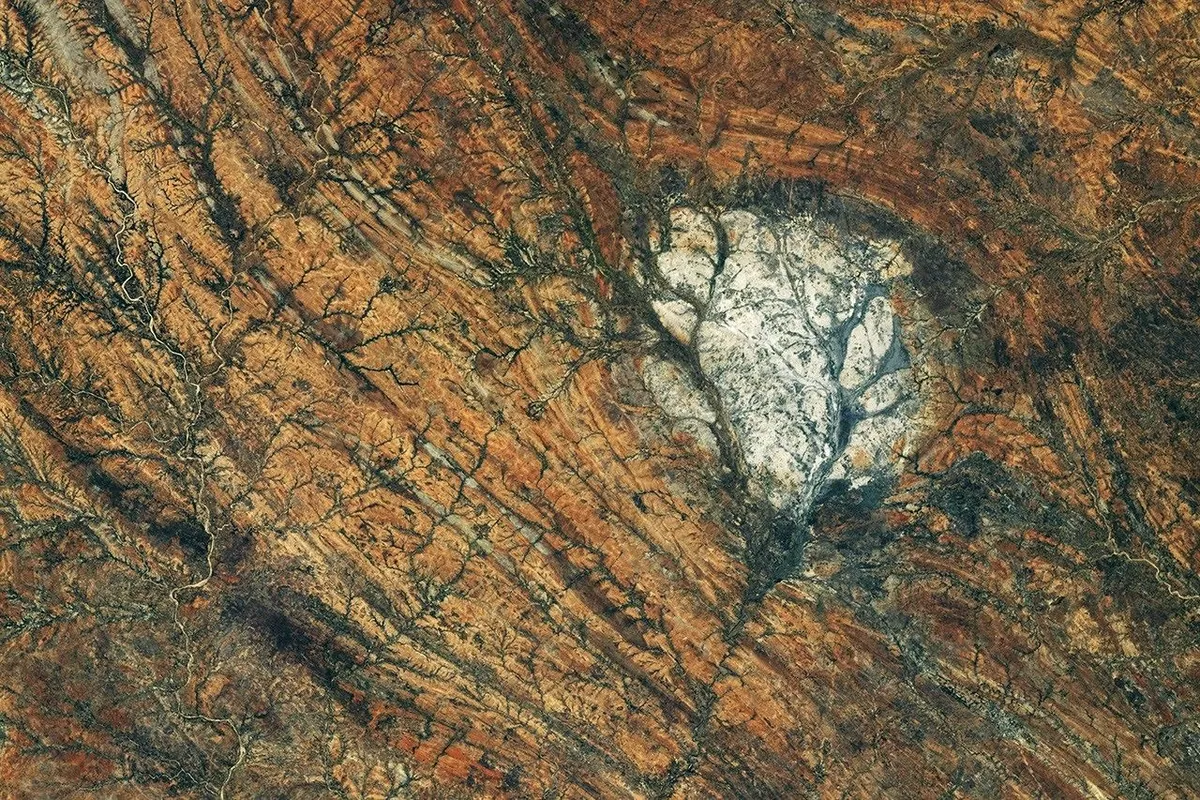
An image from the International Space Station shows the Saririaky anorthosite massif, a terrestrial formation that may help scientists study the Moon’s past.
An astronaut aboard the ISS photographed the Saririaky anorthosite massif in southern Madagascar on August 28, 2026, using a Nikon Z9 camera. The rock resembles anorthosite, a type also found on the Moon.
The massif is estimated to be at least 600 million years old, with an exposed area of about 100 square kilometers. Pressure and heat in a shear zone deformed the rock. Geologists link the process to Gondwana’s formation. Another massif lies about 60 kilometers north.
Earth analogues help scientists study the Moon because Apollo samples are limited. Lunar anorthosites are more than four billion years old. Rocks in Montana’s Beartooth Mountains are a close compositional match.