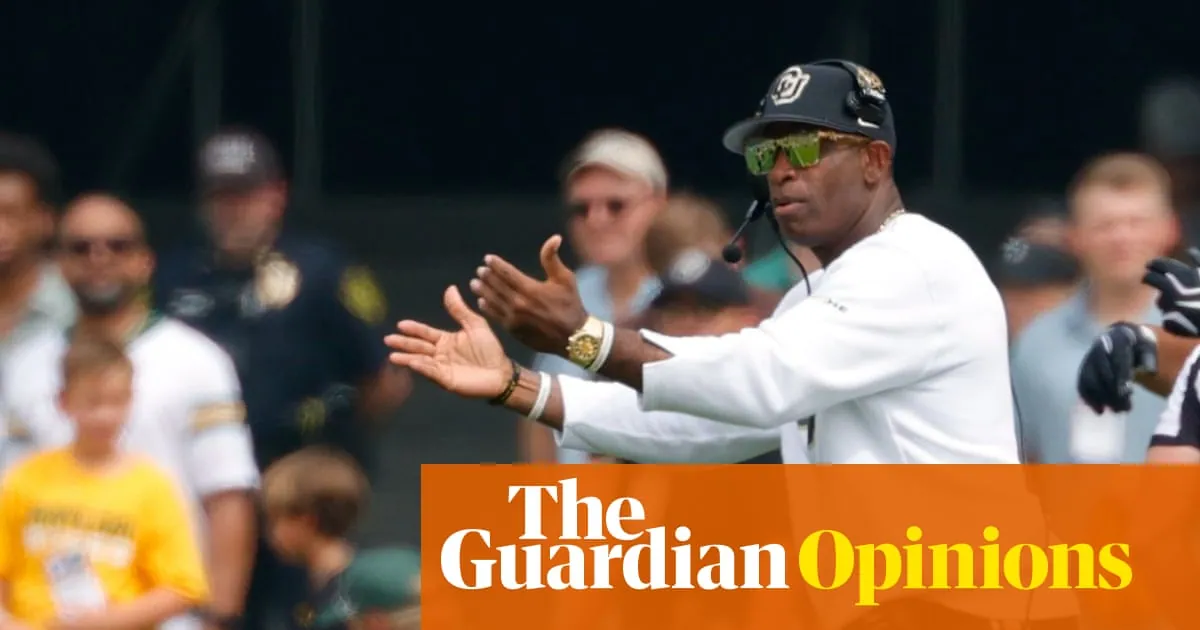
The Senate passed the Protect College Sports Act, which addresses athlete compensation, NIL deals and transfers. A promotional ad featuring coach Deion Sanders has drawn criticism from advocates for athlete rights.
The U.S. Senate passed the Protect College Sports Act on Sept. 28 by a vote of 77-22. The bill would establish federal rules for college sports, covering athlete compensation, name, image and likeness (NIL) deals and transfers between universities. It still needs House approval, and the timing is uncertain. The Associated Press reported that the House was not expected to return to college-sports legislation before the midterm elections.
The debate intensified after coach Deion Sanders appeared in an advertisement supporting the measure. Sanders, the Colorado head coach and former NFL player, says the bill can help student-athletes find opportunities, strengthen historically Black colleges and universities and preserve men’s and women’s sports. Guardian columnist Rob Parker criticized Sanders for backing it. That is the columnist’s judgment, rather than an established account of Sanders’s motives.
Among the bill’s disputed provisions are limits on how much schools may direct to athletes—critics put the figure at about $49 million per school—and tighter transfer rules. Supporters say a national framework could reduce legal uncertainty and protect college programs. The AP has also reported provisions intended to preserve scholarships and roster places for Olympic sports. Opponents argue that restrictions on compensation and movement could strengthen governing bodies’ control over athletes and constrain their earning opportunities.
NIL rules are central to the wider argument over how college sports revenue should be shared. The bill would not abolish NIL deals, but the Guardian’s account says it would require deals to show a genuine commercial purpose and compensation comparable to similar endorsements. Critics warn that this could rule out arrangements they see as disguised pay for playing. Supporters say clearer standards and oversight are needed.
Sanders has previously said college athletes should be compensated for use of their names, images and likenesses, while also expressing concern about the scale of current payments and transfers. The Guardian’s opinion piece contrasts that position with Sanders’s history of building a commercial public profile as an athlete. Sanders, in the ad, frames his support as a way to protect college programs, including HBCUs and women’s sports.
The congressional debate is about more than financial limits. It also raises the question of who should set the rules—lawmakers, universities, athletic associations or athletes themselves through representation. Senate passage does not make the proposal law, and its terms could change if the House takes it up.
The Guardian column also sets out figures behind its argument: it describes a roughly $49 million limit on school payments to athletes, Sanders’s $10 million annual salary and more than $121 million earned by Nick Saban during his Alabama tenure. It also cites a $27 million deficit in Colorado’s athletic department and says Black players make up 66% of football rosters in three major conferences. Those figures and the causal claims are presented by the Guardian writer as part of the column’s case.