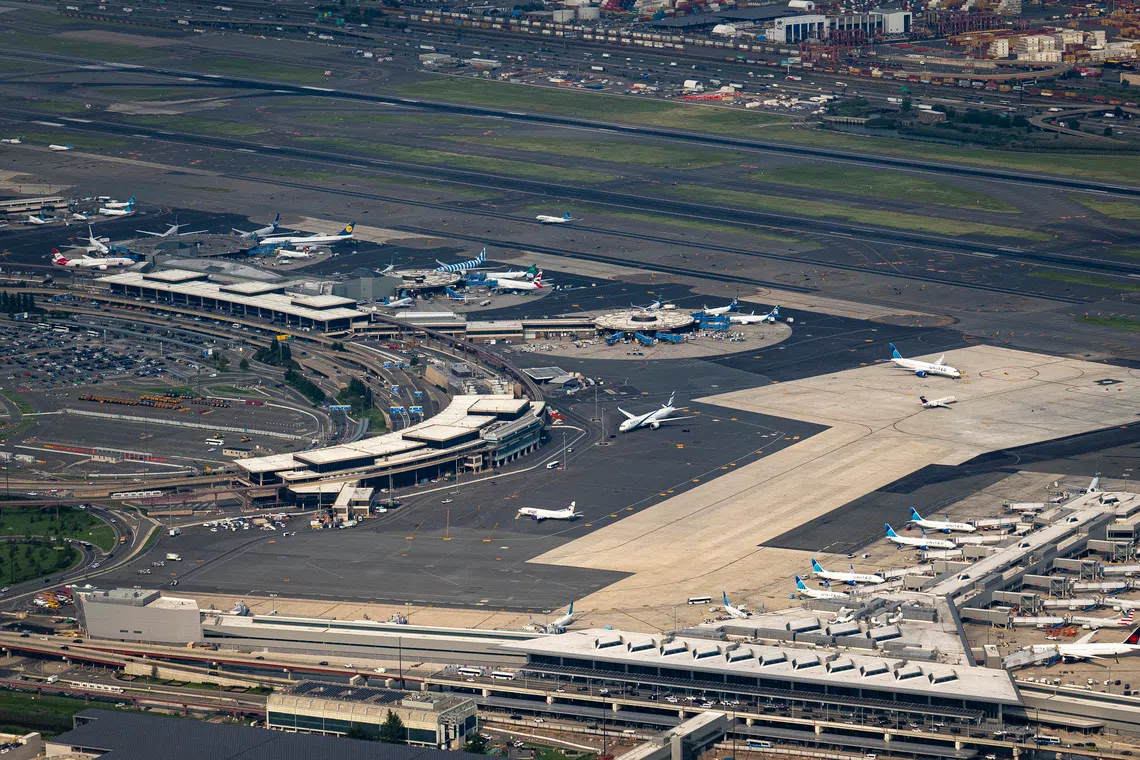
The outage began at about 9:45 a.m. when workers digging near New Brunswick cut a fiber‑optic cable that carries critical communications for the FAA’s air‑traffic control system. The loss of the primary circuit, and a broken backup line, compelled the agency to issue ground stops on arrivals at Newark, LaGuardia and John F. Kennedy airports, as well as at Philadelphia International and Boston Logan, for roughly eight hours.
Flight‑tracking data from FlightAware showed that around 7,000 flights were delayed or cancelled nationwide, including roughly 1,400 at the three New York‑area hubs. More than half of all flights scheduled for Newark – a major United Airlines hub – were cancelled, and over 100 flights were diverted to alternate airports. The disruption coincided with the arrival of about 130 world leaders and dozens of ministers for the United Nations General Assembly in New York.
Transportation Secretary Sean Duffy posted on X late in the afternoon that the damaged fiber had been repaired and normal operations were resuming across the Northeast, though he warned that lingering delays would take time to clear. FAA Administrator Bryan Bedford told reporters the safety of the airspace remained the top priority and apologized for the “absolutely horrible” timing of the incident.
Initial statements from Duffy blamed an Amtrak construction crew for the cut, but Amtrak denied responsibility. New Jersey Transit later said a crew was digging three metres from utility markings and was still determining whether Verizon or the contractor had placed the markings. Verizon confirmed it was working to restore the damaged cable near the Amtrak rail line.
The episode highlighted the fragility of the United States’ aging air‑traffic control infrastructure. In 2025, Congress allocated $12.5 billion for system upgrades and controller hiring, and Duffy said an additional $17.5 billion would be needed to complete the work. He called the outage “unacceptable” and urged swift legislative action.
FAA officials said a replacement circuit has been readied for installation at the Philadelphia Terminal Radar Approach Control (TRACON) facility, which handles traffic for the region’s airports. The new circuit is expected to restore full redundancy and reduce the risk of a similar prolonged shutdown in the future.