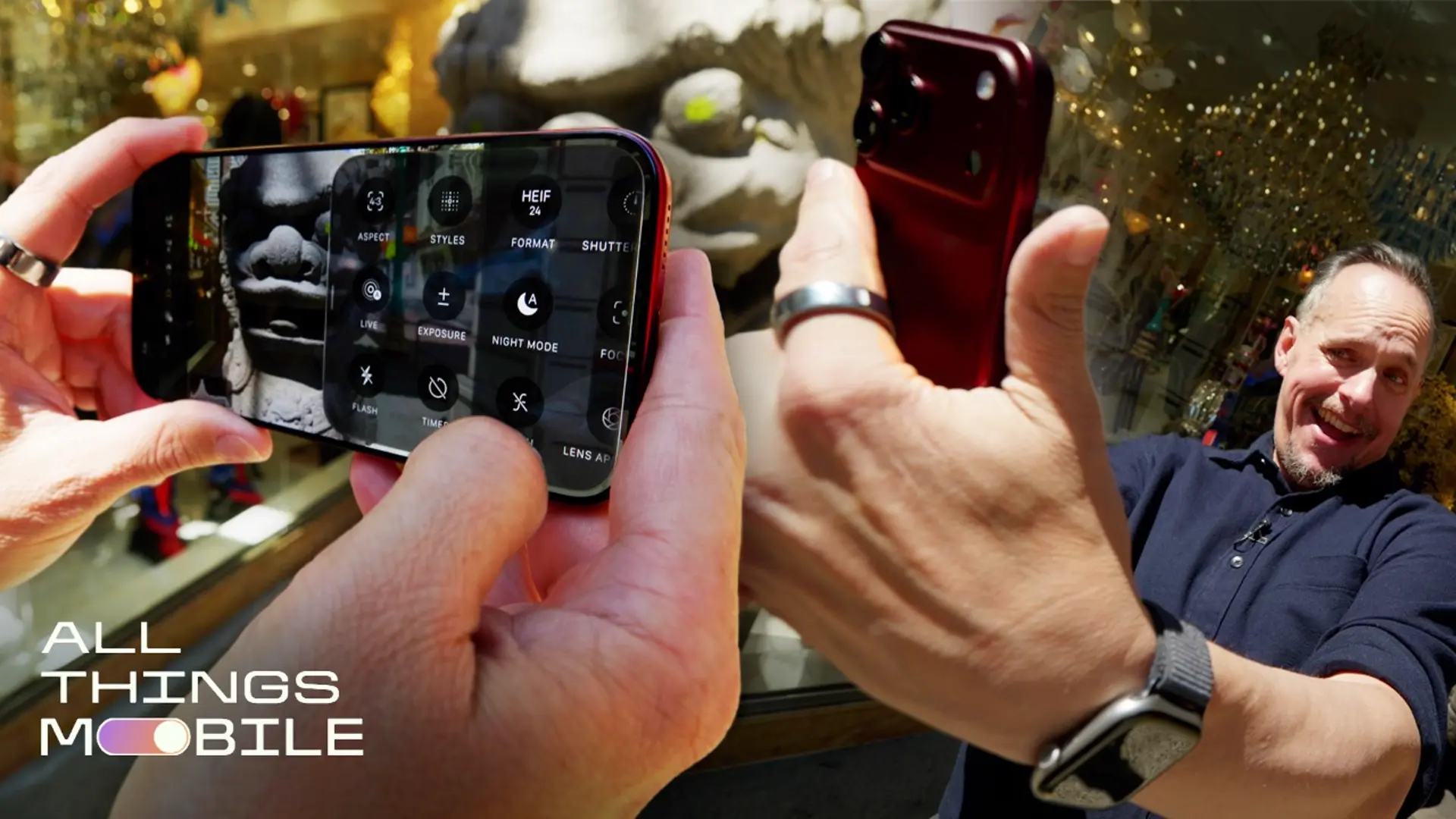
The iPhone 18 Pro and iPhone 17 Pro share identical dimensions—5.91 × 2.83 × 0.34 inches—and both sport a 6.3‑inch Super Retina XDR LTPO OLED screen, meaning existing cases will fit the newer model without modification.
Weight is the only physical distinction: the 18 Pro tips the scales at 7.44 ounces, a few grams heavier than the 7.27‑ounce 17 Pro, a difference attributed to the polymer blades that enable the new variable‑aperture system.
Apple’s most notable hardware addition is the variable aperture on the rear triple‑camera array, which lets users select between four preset f‑stops—f/1.48, f/1.8, f/2.8 and f/4.0—offering greater control over depth of field and low‑light performance.
Aside from the aperture change, the rear camera hardware remains a 48‑megapixel triple‑lens setup, and the 18 Pro’s front‑facing 18‑megapixel sensor retains the Center Stage feature that automatically frames subjects.
Under the hood, the 18 Pro is powered by Apple’s new A20 Pro chip, built on a 2‑nanometer process, replacing the A19 Pro in the 17 Pro. Early testing shows the A20 Pro handling video playback and gaming without stutter, though Apple has not released detailed performance benchmarks.
Battery capacity appears unchanged, with both models delivering roughly 24 hours of mixed‑use runtime. However, charging speed has improved: the 18 Pro reaches 82 percent charge in 30 minutes, compared with 69 percent for the 17 Pro in the same test.
The 18 Pro ships in glacier blue, burgundy red, black and silver, while the 17 Pro offered a cosmic orange option that is not carried over to the newer model.
Pricing differences are modest; the 18 Pro costs about $100 more than the 17 Pro, positioning the older model as a cheaper alternative for buyers who do not need the variable‑aperture feature.