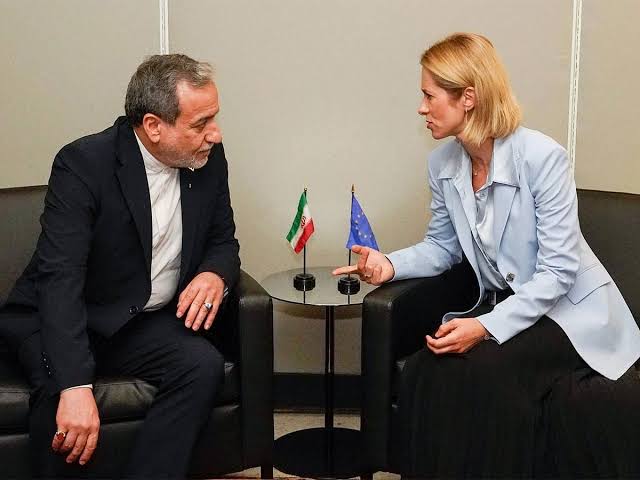
Kallas confirmed the meeting in a post on X, saying the two officials discussed "diplomatic prospects for ending the war and fully reopening the Strait of Hormuz," a waterway that has become a flashpoint in the broader regional tension.
The EU chief stressed that navigation through both the Strait of Hormuz and the Bab al‑Mandeb should remain free and unimpeded, rejecting any proposal to impose tolls or fees on vessels—a practice she said did not exist before the conflict and should not be introduced now.
Kallas also raised European concerns over Iran’s internal human‑rights situation, citing what she described as a sharp increase in executions and death sentences, thereby adding a domestic dimension to the talks that were otherwise dominated by security and de‑escalation issues.
The meeting took place amid a flurry of diplomatic activity in New York, where Iranian officials have been holding a series of engagements with international counterparts, and indirect contacts involving the United States and regional mediators are exploring conditions for de‑escalation.
European leaders, including Italy’s foreign minister Antonio Tajani, have also met Araghchi, signalling the EU’s intent to stay involved in a process that is increasingly shaped by Washington and Gulf mediators. For Tehran, dialogue with European officials offers another channel to convey its position on Hormuz, the conflict and broader settlement terms.
With the Strait of Hormuz handling a significant share of global energy shipments, its unrestricted reopening is viewed as a key component of any durable diplomatic settlement, and Kallas’ remarks place maritime freedom at the centre of the EU’s broader push for a negotiated resolution.