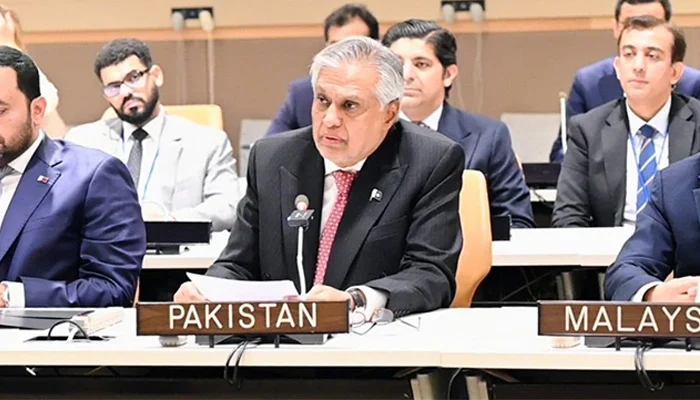
Speaking to the Organisation of Islamic Cooperation (OIC) Contact Group on Afghanistan in New York, Dar warned that recent cross‑border terrorism, exemplified by the deadly attack in Kohat, Khyber Pakhtunkhwa, underscores the security threat Islamabad attributes to militants finding sanctuary in Afghanistan.
The Kohat strike, which killed civilians and injured scores of others, was cited by Dar as a stark reminder that “terrorist groups are operating from Afghan territory and targeting neighbouring states,” a claim he said must be addressed through “concrete and verifiable action.”
Dar appealed directly to the Afghan Taliban authorities, urging them to dismantle alleged terrorist sanctuaries, fulfil Afghanistan’s international obligations, and ensure that Afghan land is not used to launch attacks against any neighbour, particularly Pakistan.
Beyond security, Dar pressed the Taliban to lift restrictions on women and girls, promote politically inclusive governance, and facilitate the resettlement and integration of Afghan returnees, linking these reforms to broader regional stability.
He also called on the international community to step up funding for Afghanistan’s humanitarian needs and to support its economic and social development, reiterating Pakistan’s policy of backing a peaceful, stable and prosperous Afghanistan that maintains good relations with its neighbours.
In the same address, Dar turned to the OIC Contact Group on Jammu and Kashmir, thanking member states for their support of the Kashmiri people’s right to self‑determination under UN resolutions and accusing India of demographic engineering in Indian‑occupied Jammu & Kashmir since August 2019.
He condemned India’s decision to place the Indus Waters Treaty in abeyance, citing a September 2026 Court of Arbitration ruling that reaffirmed the treaty’s continued legal force, and warned that the May 2025 Pakistan‑India military confrontation highlighted the dangers of leaving the Kashmir dispute unresolved.
Dar concluded by urging that regional disputes be settled through diplomacy and international law, emphasizing that Pakistan had responded responsibly to recent tensions and remains committed to a negotiated, lawful resolution.