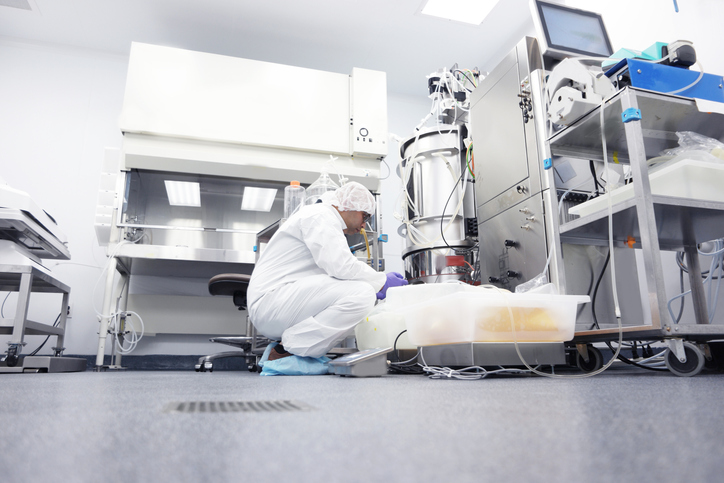
Perfusion bioreactors have long been a staple of biopharmaceutical development, but their commercial adoption has been hampered by the high cost of fresh culture media, according to Eric Wynne, PhD, a postdoctoral associate at MIT’s electronics research lab.
Wynne and his team have detailed a novel “electrokinetic waste separation” method that applies an electric field to split used media into two streams: a harvest stream containing uncharged nutrients needed for cell growth, and a waste stream enriched with charged contaminants such as ammonia and lactate.
Unlike earlier attempts that simply filtered spent media, the electrokinetic approach includes a cleaning step that removes cellular debris and reagents, allowing the harvested stream to be reused without significantly affecting cell productivity.
In pilot experiments the researchers recovered 87.5% of the original media volume, a marked improvement over the less‑than‑50% reuse rates typical of current perfusion processes, which often suffer from reduced cell growth when media is recycled without cleaning.
Wynne cautions that the technology remains at a pilot stage and will require further characterization of its impact on product quality attributes before it can be adopted at scale. He suggests that small‑scale and pilot‑scale testing in perfusion bioreactors will be necessary, particularly for fully continuous monoclonal antibody (mAb) production lines that incorporate continuous chromatography downstream.
If the method proves viable, it could make perfusion‑based manufacturing more economically attractive by lowering both media consumption and waste‑handling costs, especially when combined with hybrid or fully continuous production modes.