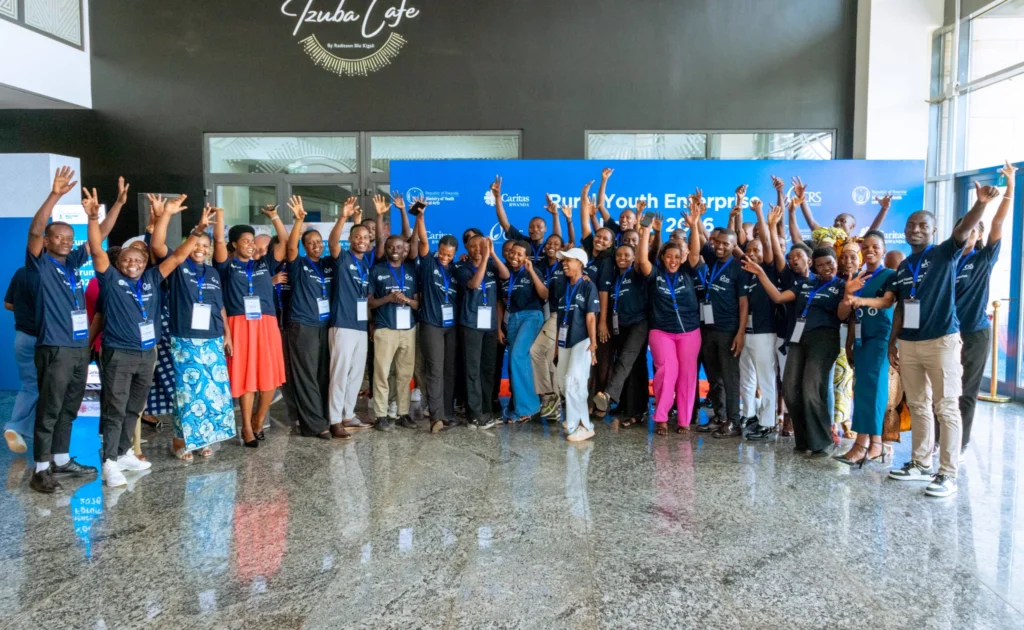
According to the 2022 Population and Housing Census, about 65 % of Rwanda’s residents are under the age of 30 – a share projected to stay above 54 % even by 2050. The demographic reality underpins the mandate of the Ministry of Youth and Arts (MoYA), which aims to convert the youth bulge from a potential pressure point into a demographic dividend.
President Paul Kagame tasked the new minister, Dr. Utumatwishima – a former epidemiology research fellow at the U.S. National Institutes of Health – with consolidating his predecessor’s work and empowering young Rwandans as drivers of socioeconomic development. He is supported by Minister of State for Youth and Arts Sandrine Umutoni, who joined the ministry in August 2023 after leading the Imbuto Foundation, the NGO founded by First Lady Jeannette Kagame.
MoYA’s strategy is organised around four interconnected pillars. The most visible is youth employment and entrepreneurship, delivered through flagship platforms such as YouthConnekt, launched in 2012, which links young people to jobs, incubators, mentorship and finance. Partners include UNDP, UNFPA and Korea’s KOICA. The annual YouthConnekt Africa Summit in Kigali has become one of the continent’s largest youth‑policy gatherings.
Another pillar, the Hanga Pitchfest startup competition run with the Rwanda Development Board and UNDP, has hosted over 200 startups since 2021 and facilitated more than Rwf 600 million in funding. The minister cites an 85 % success rate among past beneficiaries who have expanded their businesses and hired additional youth.
Leadership and civic participation are nurtured through structures like the National Youth Council, which operates an elected grassroots representation model similar to the National Women’s Council. Capacity‑building programmes focus on work‑based learning, technical‑vocational training and digital skills to close the gap between education and labour‑market needs, a priority the minister repeatedly stresses on occasions such as Labour Day.
The ministry also engages the diaspora through the annual Rwanda Youth Tour, coordinated with the Ministry of Foreign Affairs, and partners with international organisations, private‑sector actors and civic groups such as the Unity Club on national programmes like Ndi Umunyarwanda, which promotes history, unity and reconciliation among students.
Since a 2023 reorganisation that merged youth and arts portfolios, MoYA has expanded support for creative‑industry talent. The YouthConnekt Awards now recognise both business innovators and artists, with the 2026 edition slated to honour more than 140 young entrepreneurs and creatives. Minister of State Umutoni has championed film as a tool for remembrance, launching Cine Kwibuka, a cinema platform that screens documentary films about the 1994 genocide.
Officials acknowledge that formal employment remains elusive for many young Rwandans, especially those outside Kigali. They argue that sustained investment in quality education, mentorship and targeted support is essential for Rwanda to achieve its goal of becoming a knowledge‑based, upper‑middle‑income economy by 2035.