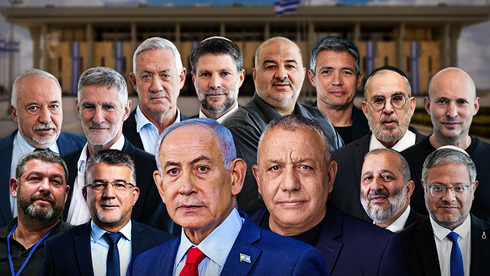
Benjamin Netanyahu's Likud is centering its campaign on security, the war and the slogan “We will not surrender,” presenting the prime minister as a leader able to withstand pressure. It is also attacking its main rival, Gadi Eisenkot, and arguing that a government led by him could depend on Arab parties. Eisenkot's Yashar! party is campaigning on national recovery after October 7 and three years of war, and on opposition to the government's proposed military-service exemptions. Ynet reports that Yashar! is trying to make gains in cities traditionally identified with Likud.
Former prime minister Naftali Bennett's BeYachad is campaigning after joining forces with Yair Lapid's Yesh Atid. It is emphasizing plans for security, the cost of living and education. Bennett is holding three to four public events a week and targeting voters who have yet to choose a bloc. Itamar Ben-Gvir's Otzma Yehudit is focusing on its security and prison policies, using social media heavily and appealing particularly to younger voters.
Bezalel Smotrich's Religious Zionism is promoting its record and policies in the West Bank under the slogan “Yes, Smotrich.” Avigdor Lieberman's Yisrael Beiteinu is presenting itself as a national and liberal alternative to the current government. Yair Golan's Democrats say they will not join a government with Netanyahu, ultra-Orthodox parties or Kahanists; the article says the party has more than 115,000 members. Shas and United Torah Judaism are concentrating on their core religious constituencies and rabbinical guidance.
Smaller lists are focused on clearing the electoral threshold. Ofir Winter's Amcha Yisrael combines a pledge to recommend Netanyahu with a message about bringing new faces into politics. A list associated with Yoaz Hendel and Yaron Zelicha is highlighting military service, governance and economic reform; recent polls cited by Ynet put it at four to five seats. Mansour Abbas's Ra'am is stressing political influence and personal security, while the Joint List is seeking higher turnout among Arab voters and emphasizing civil rights and Palestinian issues.
The campaign is therefore a contest for distinct groups—from religious voters to Likud strongholds and undecided people between blocs—rather than a single national message. Ynet's account describes campaign plans and statements by party figures; those promises and forecasts are political claims, not established outcomes.