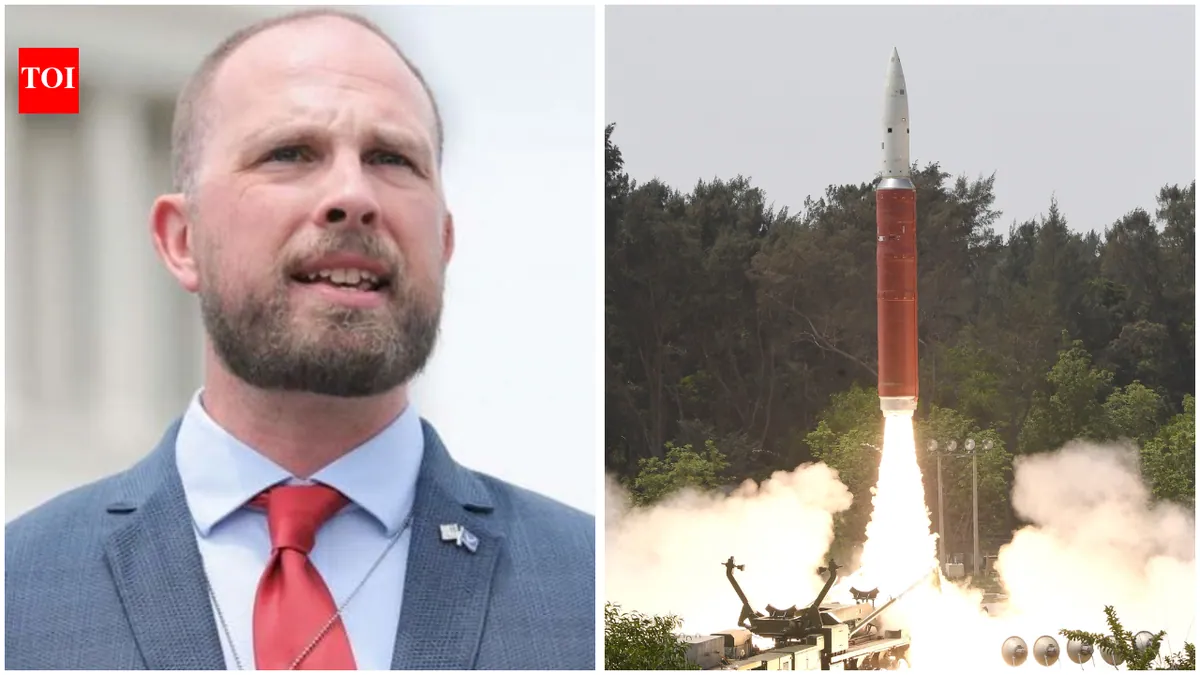
David Grusch says U.S. agencies knew a missile launch was planned but did not expect it to destroy a satellite in orbit. NASA estimated that the test produced about 400 debris fragments.
Former National Reconnaissance Office officer David Grusch says U.S. agencies did not expect India’s March 27, 2019 missile test to be an anti-satellite strike. Speaking on the Joe Rogan podcast, he recalled being asked to assess possible damage to American satellites after the launch.
India used a direct-ascent interceptor against its own defunct weather satellite, Microsat-R. Washington knew a launch was planned because India had issued a NOTAM off the coast of Odisha. But Grusch said U.S. officials did not anticipate that the missile would hit a satellite in orbit.
Grusch, then on duty at the NRO operations centre, described calling the embassy and rapidly assessing the debris field. Analysts were asked to determine whether U.S. reconnaissance satellites would need to manoeuvre.
Prime Minister Narendra Modi announced the test, known as Mission Shakti, in a national address. India became the fourth country, after the United States, Russia and China, to demonstrate the ability to destroy a satellite with a direct-ascent interceptor.
NASA criticised the test over risks to astronauts aboard the International Space Station. The agency estimated that roughly 400 fragments were initially tracked, with 24 reaching apogees above the station’s orbit. Most debris at the test’s low altitude was expected to re-enter within weeks or months.
The United States itself conducted destructive anti-satellite intercept tests in 1985 and 2008. The Times of India also says Washington recently acknowledged deploying a dedicated counter-space weapon in orbit, but does not identify the system or give further details.