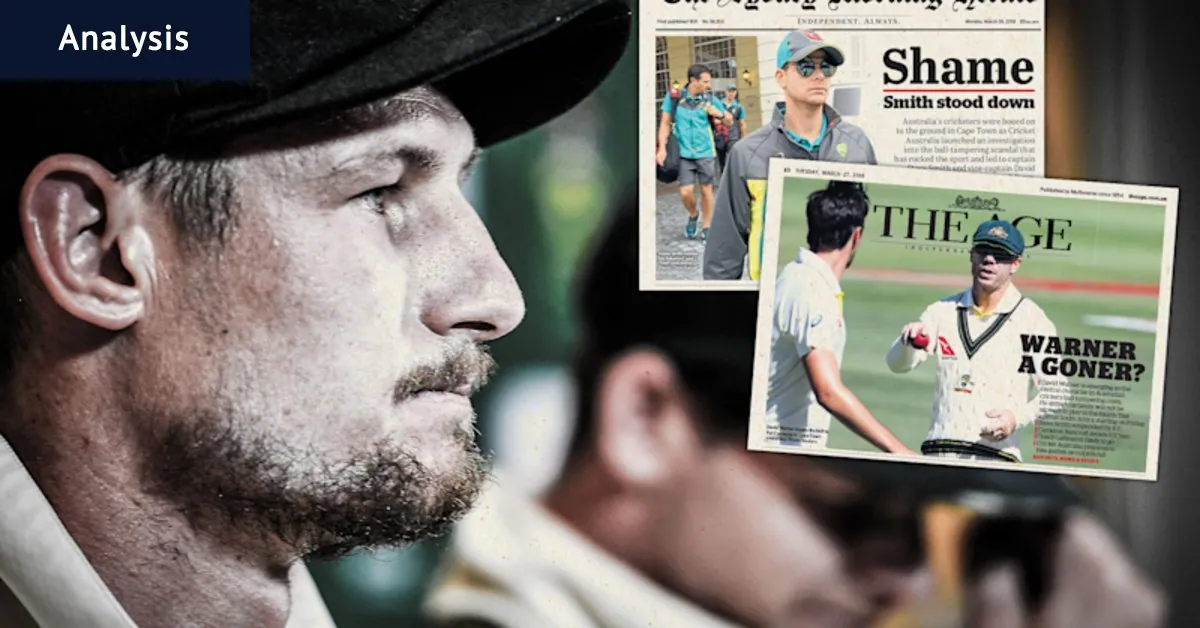
A leaked USB video of David Warner and Quinton de Kock was an early sign of a South Africa tour already charged with hostility, a journalist recalls.
The 2018 Australia–South Africa Test series was volatile well before Cameron Bancroft was caught with sandpaper at Cape Town’s Newlands, according to a reporter who covered the tour. Sixteen days before that moment, the journalist says, an anonymous visitor delivered a USB drive to his hotel room in Port Elizabeth. It contained previously unseen footage of a stairwell confrontation between David Warner and South Africa wicketkeeper Quinton de Kock during the first Test in Durban.
The clip, recorded from a different angle than footage already circulated to South African media, triggered another round of headlines. The reporter describes it as one episode in a tour where tensions had been building from the start. Australia had asked broadcaster SuperSport to lower stump microphones while the team fielded. The request was refused. Players initially joked about the microphones and used them to mention sponsors, but relations worsened after Warner and de Kock exchanged alleged insults. Warner said he was angered by comments about his wife, Candice, and denied making personal attacks on de Kock’s family.
Other incidents added to the atmosphere. Spectators wore Sonny Bill Williams masks during the Port Elizabeth Test, which the reporter says intensified taunts directed at Warner’s family. South African fast bowler Kagiso Rabada later shoved Australian captain Steve Smith after dismissing him, further inflaming tempers. Disputes over on-field conduct and reverse swing added to mutual suspicion. South Africa’s win in Port Elizabeth levelled the series at 1-1, but a nine-day break before Cape Town offered only a pause.
The reporter was ill in his hotel when the ball-tampering incident erupted on the third day at Newlands. Watching on television, he heard commentators identify signs that something was wrong. The scandal quickly eclipsed the match. Smith and Bancroft gave a press conference after play despite advice not to, and the next morning Warner was being described as a central figure. Australia’s leaders were sent home, Smith lost the captaincy, and the team was bowled out for 107 in a defeat that drew little attention beside the controversy.
Reporting then became a race to verify developments. The journalist recalls filing a story that Warner and Smith could face bans, then nearly missing an announcement in Johannesburg after being placed on standby for an overbooked flight from Cape Town. He confirmed that Warner had been removed from the team’s WhatsApp group and wrote from the airport while waiting for a seat. He ultimately made the flight in time for Cricket Australia chief executive James Sutherland’s press conference.
The sanctions did not end the three players’ careers. Smith returned to the team and captained Australia again. Warner and Bancroft also played again after serving their bans. But the reporter says the events left a lasting mark on the players and everyone who covered the tour. What began with leaks, sledging and suspicion became one of cricket’s most consequential scandals, and the series remains difficult to separate from the hostility that preceded it.