Kpler data show crude shipments exceeded their pre-war average on four days in late September. The rise came as shipping monitors reported continued attacks and warned that passage through the Strait of Hormuz remains unpredictable.
West Asian crude exports exceeded their pre-war average on four days in the final week of September, even as vessel attacks continued around the Strait of Hormuz. Provisional Kpler tracking data put daily exports at 19.5 million to 22.5 million barrels on Sept. 24 and Sept. 27–29. The seven-day average reached 18.5 million barrels a day on Oct. 1, compared with a pre-war average of 18 million barrels a day from March 2025 to February 2026.
The figures cover crude moving through Hormuz and the Red Sea, shipments from export terminals and ship-to-ship transfers in the Gulf of Oman. Kpler said the broader flow of crude, refined products, chemicals and non-gas liquids averaged 22.4 million barrels a day in the seven days to Sept. 30. LNG cargoes passing through Hormuz also rose in September to their highest monthly level since February. The counts exclude vessels that may have crossed with their automatic identification system switched off.
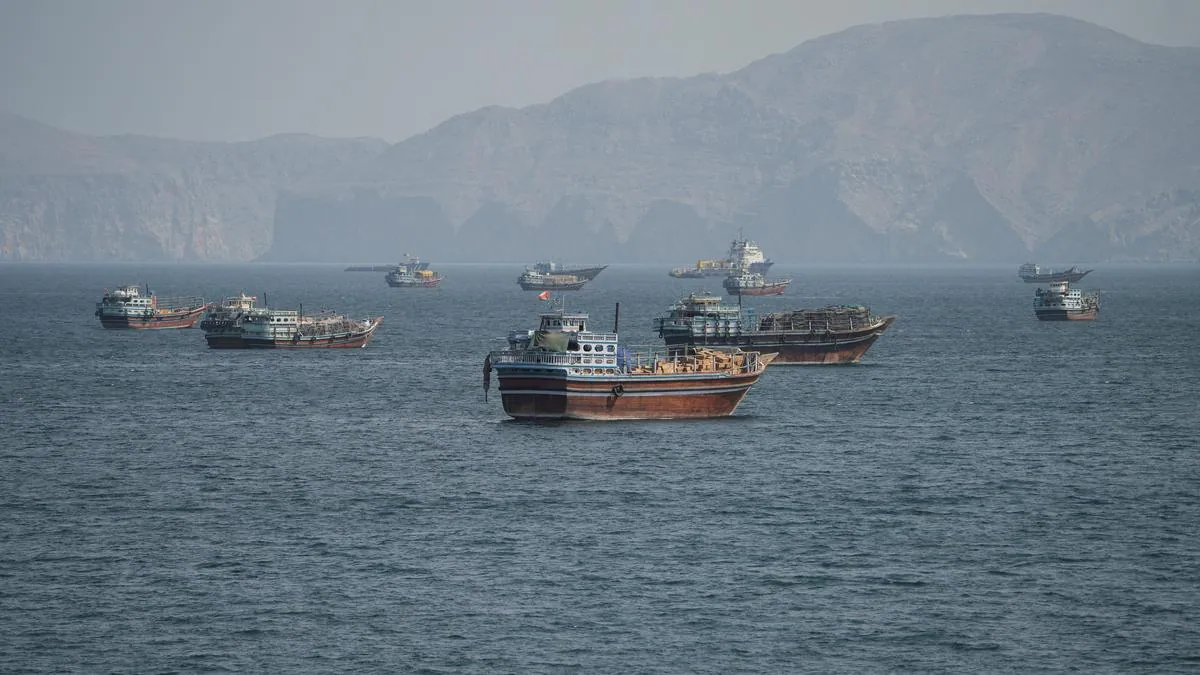
Traffic has recovered while security remains volatile. Before the war with Iran began on Feb. 28, the strait typically handled about 125 large commercial vessels a day, carrying roughly one-fifth of the world’s daily crude oil and LNG supply. Maritime intelligence firm Marisks reported at least seven incidents involving shipping by Oct. 3. UK Maritime Trade Operations said it had recorded at least one attack a day in the Strait of Hormuz or Gulf of Aden since Oct. 2.
One vessel reportedly struck was the very large crude carrier Kazimah III. An unknown projectile hit it on Oct. 1 and started a fire, according to Marisks. The crew were reported safe and evacuated. Kpler data showed the tanker had last been seen discharging two million barrels of Kuwaiti crude at Oman’s Ras Markaz port on Sept. 17. Kuwait Oil Tanker Company did not immediately respond to a request for comment.
Marisks warned that the combination of rising traffic and recent incidents has made passage increasingly unpredictable. Its assessment said the attacks may not indicate deliberate selection of individual merchant ships. It raised the possibility that missiles were being launched into a predefined engagement zone and could lock onto radar signals in the area, meaning a vessel’s presence at the wrong time could itself create exposure.
Shipping trackers caution that their counts remain provisional and may miss vessels whose tracking signals are disabled. The data therefore show a sharp rise in recorded exports and transit, but do not by themselves establish that normal conditions have returned to the route.