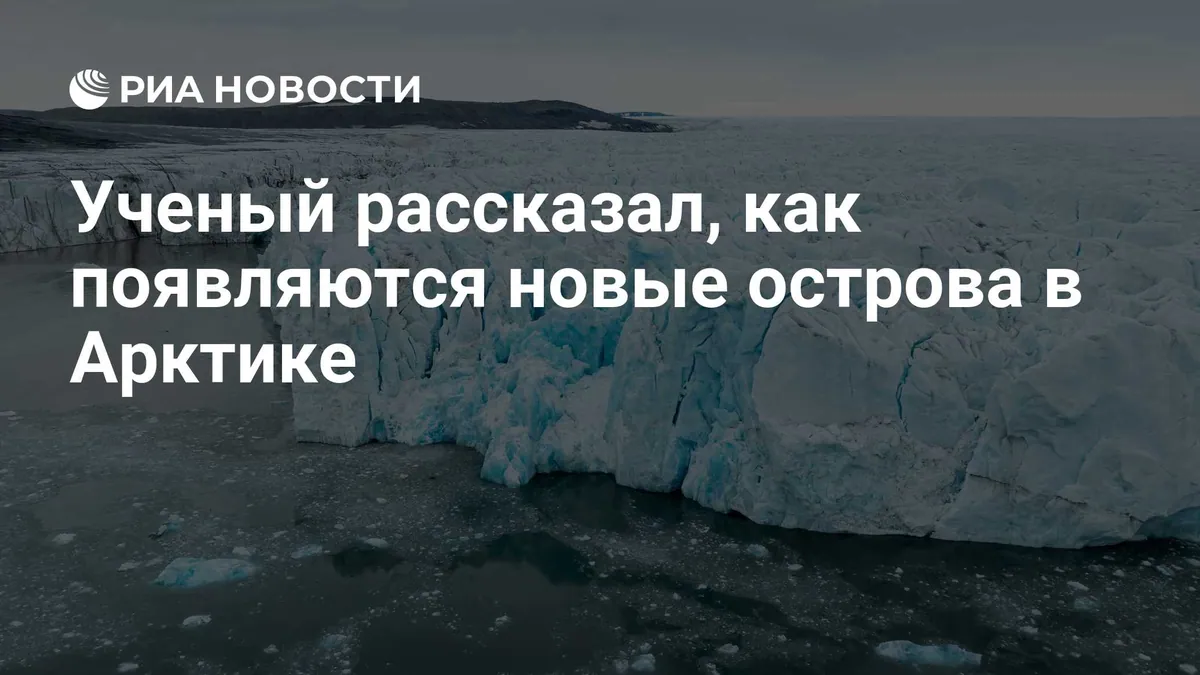
New islands are emerging in the Arctic as glaciers retreat, but it is nearly impossible to predict when a land area will finally separate from the ice, hydrographer Andrei Leonov told RIA Novosti.
The exposed land gradually grows as the ice withdraws, said the associate professor at Makarov University. Researchers consider a separate island to have appeared after the strip connecting it to a glacier has broken. Hydrographers must confirm a new feature in person before it can be officially recorded on a map.
Leonov has studied the high latitudes for years and works with Northern Fleet hydrographers to track changes across Arctic archipelagos using remote-sensing data. Glacier retreat varies by location, he said. On Novaya Zemlya, in areas where new islands formed, the retreat of glacier fronts from 1952 to 2017 ranged from 22 to 70 metres on the Kara Sea side and from 45 to 140 metres on the Barents Sea side.
Leonov cited an island in Borzova Bay, discovered by an expedition aboard the hydrographic vessel Romuald Muklevich in 2023. In 2022, the strip connecting the future island to the glacier was about 200 metres wide. Researchers expected it might take another two or three years to melt, but it disappeared within a year.
According to Leonov, more than 15 new islands have been discovered in the Arctic since 2015. Researchers are now watching Novaya Zemlya and Franz Josef Land in particular for further changes.