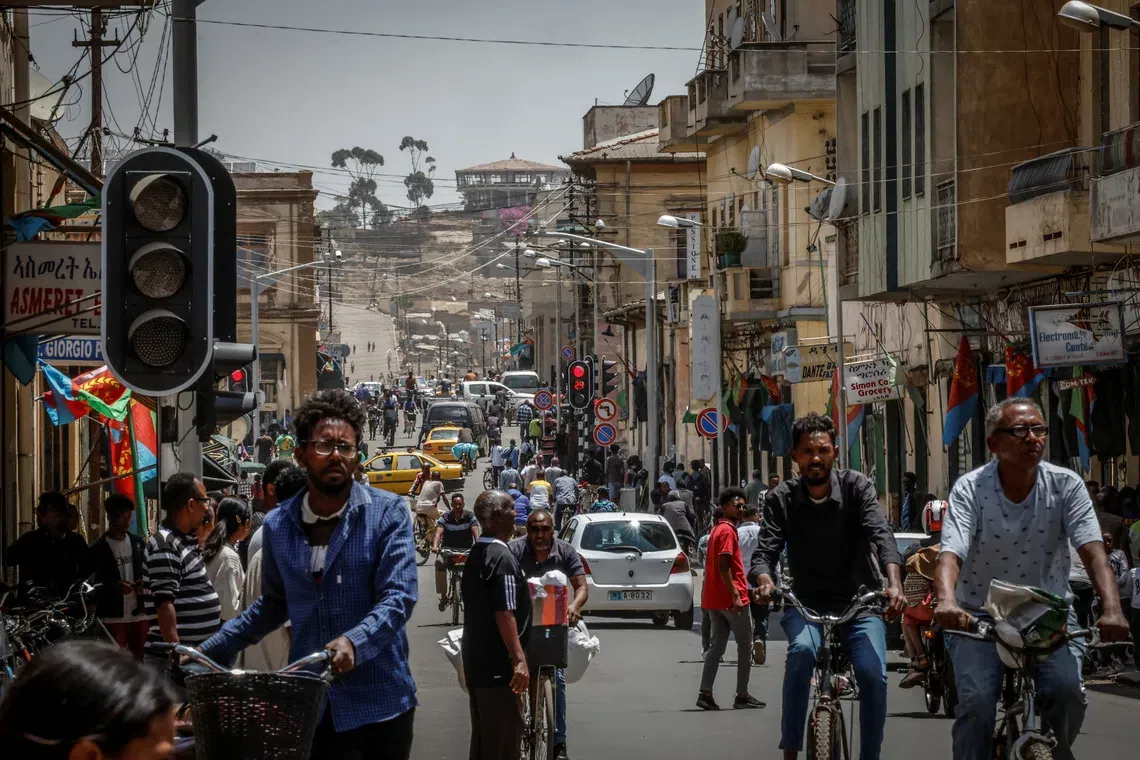
The country’s position along a vital shipping route has drawn renewed interest, while compulsory service and tensions with Ethiopia continue to shape domestic life.
The Iran conflict has renewed attention on Eritrea and its position along the Red Sea, but the country remains deeply closed after decades of isolation. As authorities signal openness to investment and reform, tensions with Ethiopia persist and compulsory national service continues to shape young people’s lives.
Education Minister Halima Mohammed grew up in a system forged during Eritrea’s independence war. At six, she was left at a desert school for children of guerrilla fighters. Eritrea seceded from Ethiopia in 1993 after a 30-year war. Today, teenagers undergo military training toward the end of secondary school and are assigned to military or civilian national service, often for an indefinite period.
Eritrea’s strategic importance has risen during the conflict involving Iran. It has about 1,000 kilometres of Red Sea coastline, an alternative shipping route after the Strait of Hormuz was effectively closed. Attacks by Iran-backed Houthi militants on commercial vessels have further raised the importance of Eritrean waters. Last week, the United States lifted sanctions imposed over Eritrean forces’ role in Ethiopia’s Tigray conflict in 2020-22.
Asmara says it is ready to expand trade and open mining to investors. But relations with neighbouring Ethiopia have deteriorated over access to the Red Sea, particularly the port of Assab. Ethiopian adviser Getachew Reda denied threats to use force and said Addis Ababa was open to a long-term port lease. Eritrea says it fears an attempt to seize Assab and denies accusations that it supports insurgents in Ethiopia. The two countries expelled each other’s diplomats last week.
The country’s isolation is visible in daily life: internet access is tightly controlled, fuel is rationed and many residents avoid discussing politics or national service. The Sawa military camp, where secondary students complete their final year and receive military training, has become a focal point of the tension between state demands and young people’s hopes of shaping their own futures.
Muse, 17, told Reuters he tried to avoid being sent to Sawa, was detained and spent six months in prison before being deployed to Assab. He escaped again, crossing the desert into Ethiopia. Reuters reviewed asylum documents and spoke with three relatives who corroborated his account, but said it could not independently verify every detail. The United Nations says more than 679,000 Eritrean refugees and asylum seekers live abroad. The government disputes both the figure and the reasons people leave, while rights groups point to prolonged compulsory service.
Against this backdrop, Mohammed says she hopes to replace national service with vocational colleges and technical schools. But she says any reform plans remain subordinate to national security. The tension between promises of change and the state’s emphasis on control remains central to Eritrea’s future.