The policy, unveiled at a press conference in London, will prevent people from nations that have formally lodged claims for compensation related to the British slave trade from obtaining UK visas. Zia Yusuf, the party’s home affairs spokesperson, said the United Kingdom could not continue to fund historic grievances, framing the decision as a matter of fiscal responsibility rather than moral reckoning.
The announcement arrives amid a renewed public debate over Britain’s colonial legacy. Historian William Pettigrew, whose recent book maps the financial networks that underpinned the slave trade, argues that the trade was woven into the very fabric of British economic development. He notes that ninety percent of the enslaved Africans shipped to the Americas travelled on British vessels, and that roughly 13,000 British investors financed the trafficking of 3.3 million Africans, half a million of whom died on the Middle Passage.
Pettigrew’s research traces the trade’s origins to the 1560s, when a coalition of merchants, naval officers and state officials began a state‑sanctioned enterprise that later received royal approval for its role in weakening Spain, expanding British influence in the New World, and filling the royal coffers. After the Glorious Revolution of 1688, the trade shifted from a royal monopoly to a free‑market venture, spreading beyond elite circles to regional ports such as Bristol and Liverpool, the latter of which “perfected and industrialised” the business in the eighteenth century.
The wealth generated by the slave trade, according to Pettigrew, funded a range of public works and cultural institutions – from docks and canals to the British Museum, the Royal Academy of Music and major London hospitals. Even the Royal Society, he argues, was an early institutional investor and a cradle for the pseudo‑scientific racism that justified the trade.
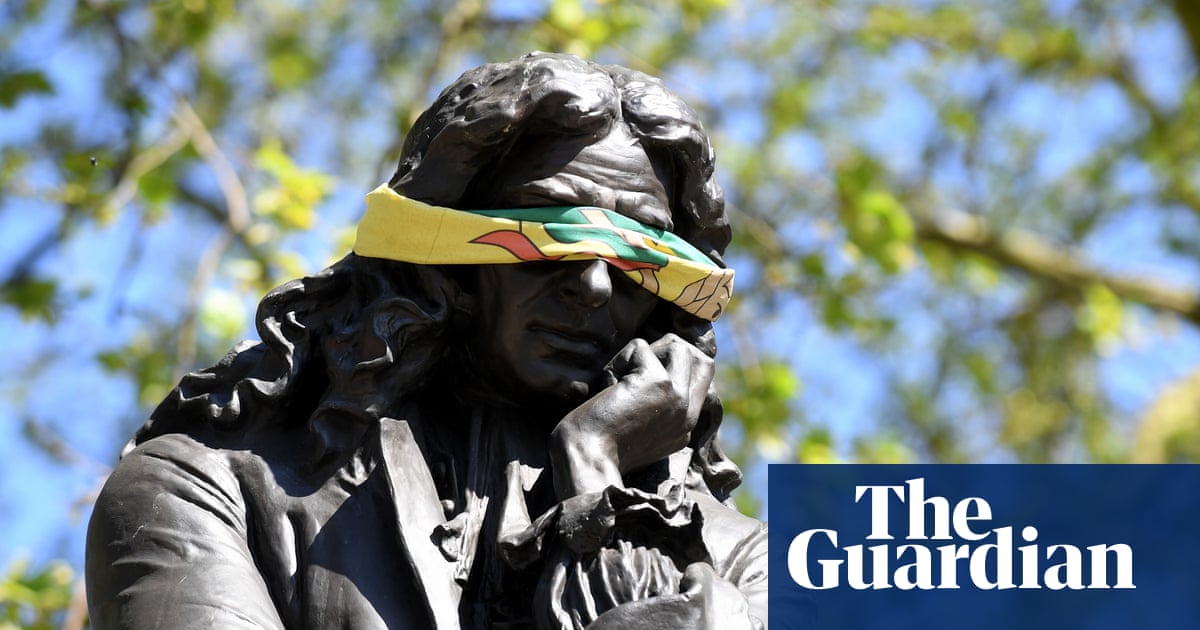
Political reactions have been mixed. While Reform’s policy frames the issue as a fiscal safeguard, critics on the left see it as an attempt to silence ongoing calls for reparations. Nigel Farage, former leader of the Brexit Party, dismissed the debate as “endless” and expressed fatigue over discussions of the UK’s complicity in slavery. The policy also follows a broader pattern of UK parties grappling with how to address historic injustices, a conversation that has included the toppling of Edward Colston’s statue in Bristol in 2020 and scrutiny of the National Trust’s colonial ties.
No legislative vote on the visa ban has yet been scheduled, and legal experts warn that the measure could face challenges under international human‑rights law. Meanwhile, historians say the Reform party’s stance underscores the difficulty of reconciling Britain’s economic heritage with the moral imperative to acknowledge and address the lasting impacts of the slave trade.