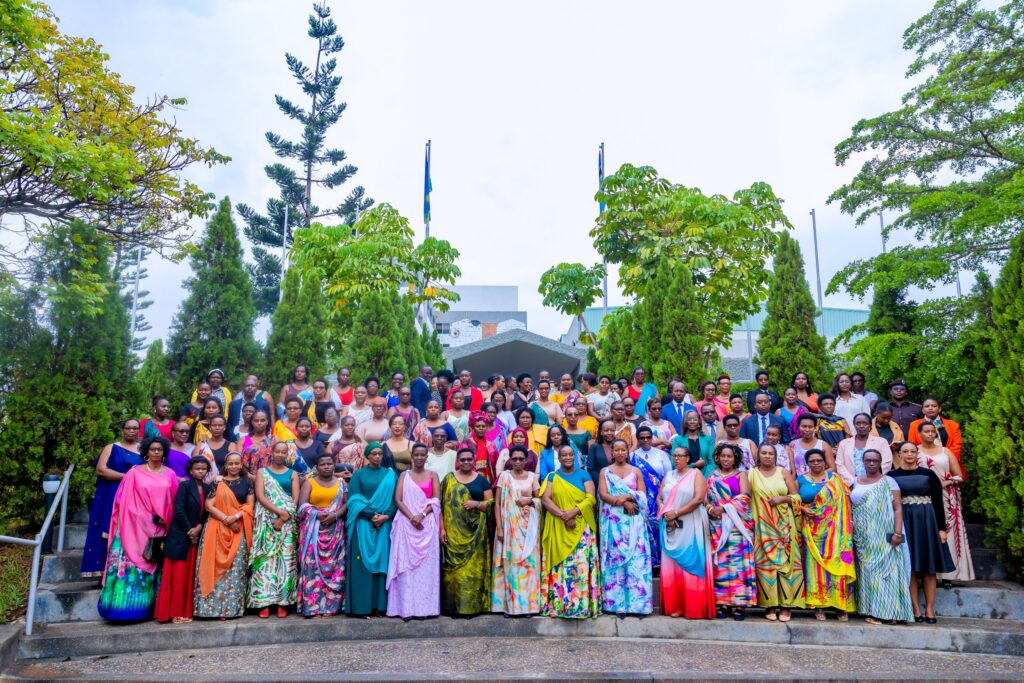
The three‑day gathering, held in the first quarter of the year’s legislative calendar, saw delegates from every administrative tier – from village committees to national leaders – assess the council’s performance over the past year and approve a roadmap for 2025‑2026, focusing on expanding women’s economic and civic participation.
Founded in 1996 in the aftermath of the 1994 genocide, the National Women’s Council (NWC), known locally as CNF, was created as a formal channel for Rwandan women to organize, be heard and contribute to the country’s reconstruction, operating through a tiered structure that links grassroots groups to the national level.
Under law, the council’s General Assembly is its supreme governing body, convening annually at each level – village, cell, sector, district and national – to set policy, evaluate programmes and elect representatives who ascend the chain of delegation, ensuring an unbroken line of women’s voices from the smallest community to the halls of parliament.
The council is currently chaired by Belancille Nyirajyambere. Its past presidents, Dr. Jeannette Bayisenge and Dr. Diane Gashumba, both later served as government ministers, illustrating how the NWC functions as a pipeline for women into senior public office.
The NWC’s mandate spans advocacy, capacity‑building, grassroots mobilisation and community sensitisation. In partnership with UN Women and national gender bodies, it has delivered leadership trainings, mentorship and peer‑learning programmes that have reached over a thousand women and girls, including those with disabilities and living with HIV. One flagship initiative, the Mutimawurugo performance‑contract programme, pilots model villages that combine digital‑literacy training, links to micro‑finance institutions and vocational support with household‑sanitation improvements.
Rwanda’s broader gender‑equality architecture – the Ministry of Gender and Family Promotion, the Gender Monitoring Office and the Forum of Rwandan Women Parliamentarians – has helped the country become a global reference point: women now occupy roughly 64 % of seats in the Chamber of Deputies, 53‑54 % of Senate seats and about 52 % of cabinet posts, far exceeding the constitutional minimum quota of 30 %. At sub‑national levels, women hold about 46‑47 % of elected cell and district council seats, narrowing the historic gap between local and national representation.
The assembly’s newly approved action plan aims to deepen that pipeline by scaling digital‑literacy projects, expanding access to micro‑finance for women entrepreneurs and strengthening community‑level advocacy on gender‑based violence, child protection and teenage pregnancy. Analysts note that such institutional continuity underpins Rwanda’s 2024 ranking of 39th on the World Economic Forum’s Global Gender Gap Index – second in Africa and first worldwide for women’s parliamentary representation.