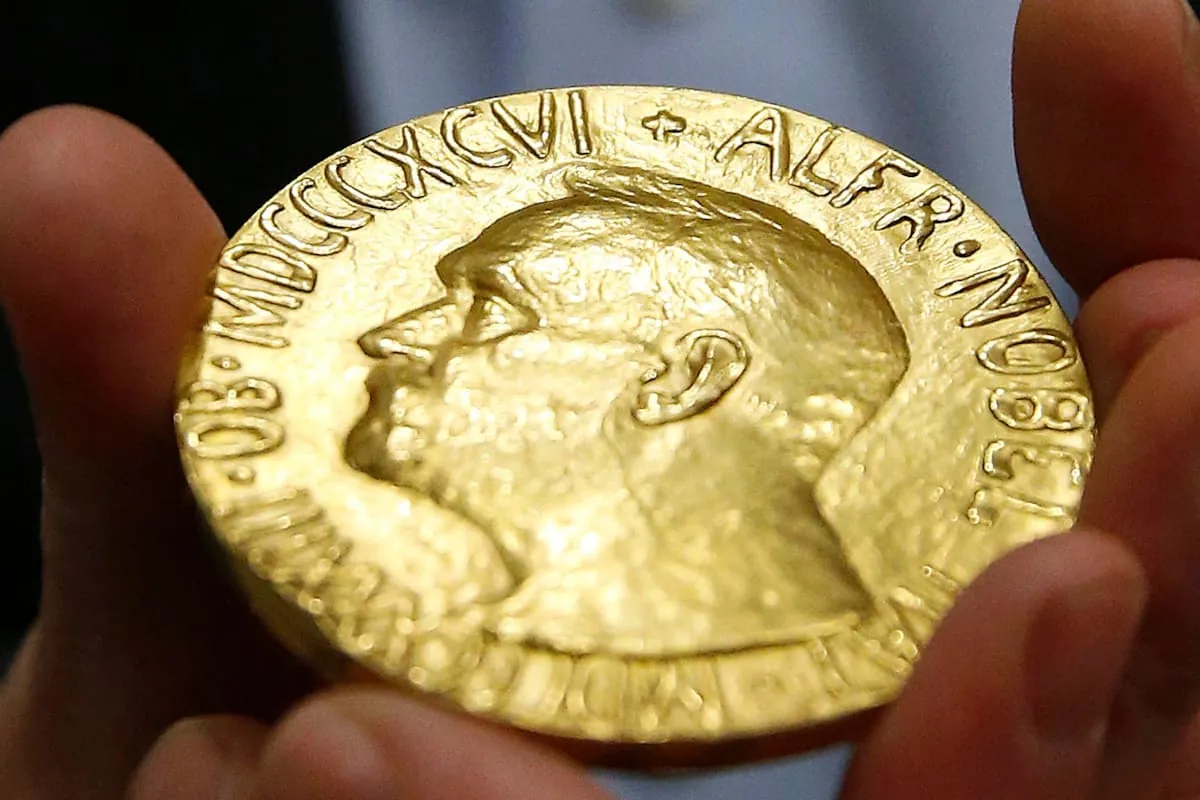
The chemistry, literature, Peace and economics prizes will be announced from Oct. 7 to 12. The awards ceremony is scheduled for Dec. 10.
The 2026 Nobel week began with the medicine prize announcement on Oct. 5. On Tuesday, Oct. 6, Francis Halzen received the physics prize for contributions to the IceCube Observatory and the discovery of astrophysical neutrinos. The remaining awards will be announced in Stockholm according to the published schedule.
The chemistry prize will be announced Wednesday, Oct. 7, literature on Thursday, Oct. 8, and the Peace Prize on Friday, Oct. 9. The Prize in Economic Sciences in Memory of Alfred Nobel will be announced Monday, Oct. 12. Six committees based in Sweden and Norway award the prizes. The dates were confirmed by the Nobel Foundation and the Royal Swedish Academy of Sciences.
The awards ceremony will take place on Dec. 10, the anniversary of Alfred Nobel’s death in 1896. Laureates receive a medal, diploma and cash award. The 2026 prize amount is 12 million Swedish kronor per category. Ceremonies are held in Stockholm and Oslo.
The 2025 physics prize went to John Clarke, Michel Devoret and John Martinis for research into quantum effects in an electrical circuit. Susumu Kitagawa, Richard Robson and Omar Yaghi received the chemistry prize for developing metal-organic frameworks. Mary Brunkow, Fred Ramsdell and Shimon Sakaguchi were honored in medicine for discoveries concerning peripheral immune tolerance. The literature prize went to László Krasznahorkai and the Peace Prize to María Corina Machado for her work supporting democratic rights in Venezuela. Joel Mokyr, Philippe Aghion and Peter Howitt shared the economics prize for work on technological progress and sustained growth.
The Nobel Prizes were established under the will of Swedish inventor and entrepreneur Alfred Nobel, who died in 1896. The first awards in the five original fields—physics, chemistry, physiology or medicine, literature and peace—were presented in 1901. The Prize in Economic Sciences was created separately in 1969 with the involvement of Sweden’s central bank. It is an addition to the five prizes specified in Nobel’s will.