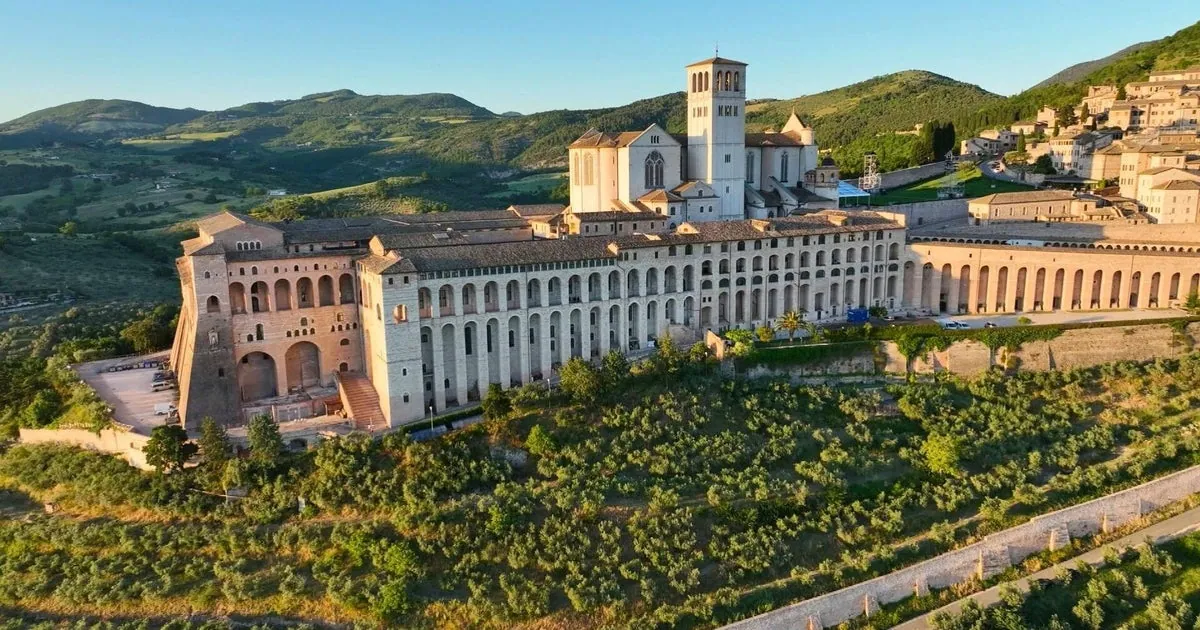
Art historians, engineers and Franciscan friars are using cameras, drones, lasers and AI to map the basilica, which was damaged in the 1997 earthquakes.
Restoration work continues at the Basilica of Saint Francis of Assisi nearly three decades after the 1997 earthquakes damaged part of its roof. More than 80,000 fragments from the 13th-century church remain unidentified, restorer Sergio Fusetti says.
Franciscan friars are working with art historians, software engineers and technology company Haltadefinizione to create a digital twin of the basilica. The team is using high-resolution cameras, drones and laser scanners to capture hundreds of thousands of images for a detailed 3D model. It is expected to be completed next year and made available to the public.
Project lead Giovanni Borelli says the model will provide restorers with a precise reference if another earthquake damages the site. The team also hopes artificial intelligence can help match missing fragments to their original locations and detect cracks, discoloration and flaking paint. Borelli says analyses that would take years to complete manually could be performed in minutes with the technology.
Digital tools are also being used to open historic sites to wider audiences. The company has helped reveal forgotten chambers at an ancient Roman bath, while virtual-reality experiences allow visitors to explore heritage sites. The Franciscan friars see the technology as a way to share the basilica’s artistic and religious heritage with more people.