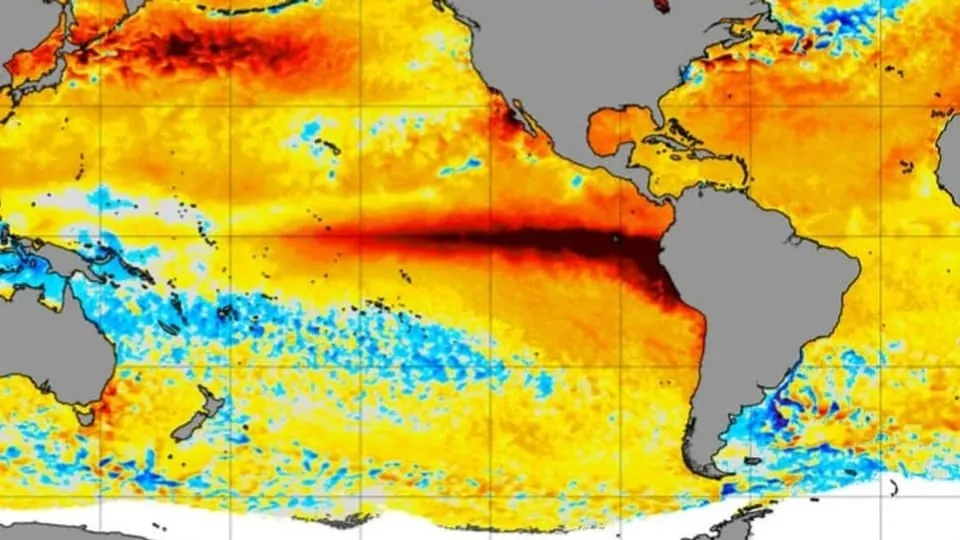
A 1,000-year reconstruction suggests modern El Niño events are stronger than earlier episodes. The researchers say their study does not prove global warming caused the change.
Coral skeletons around the Galápagos Islands have allowed researchers to reconstruct ocean temperatures over roughly 1,000 years. Their analysis indicates that El Niño has been stronger over the past four decades than at any other time in the reconstruction.
The team led by Julia Cole of the University of Michigan studied calcium-to-strontium ratios in coral skeletons, which can provide clues to past sea temperatures. The Galápagos lie in the equatorial Pacific El Niño region, where temperature swings are particularly pronounced.
The study, published in Science, estimated that modern El Niño events have become 20 to 35 per cent stronger. Satellite records extend only to the 1980s and are too short to establish a long-term trend. The IPCC’s 2021 assessment likewise found no clear evidence of the influence of global warming on El Niño.
More recent climate simulations suggest El Niño events may become both more frequent and stronger. The researchers caution that their findings do not prove global warming caused the intensification, although they consider the connection very likely.