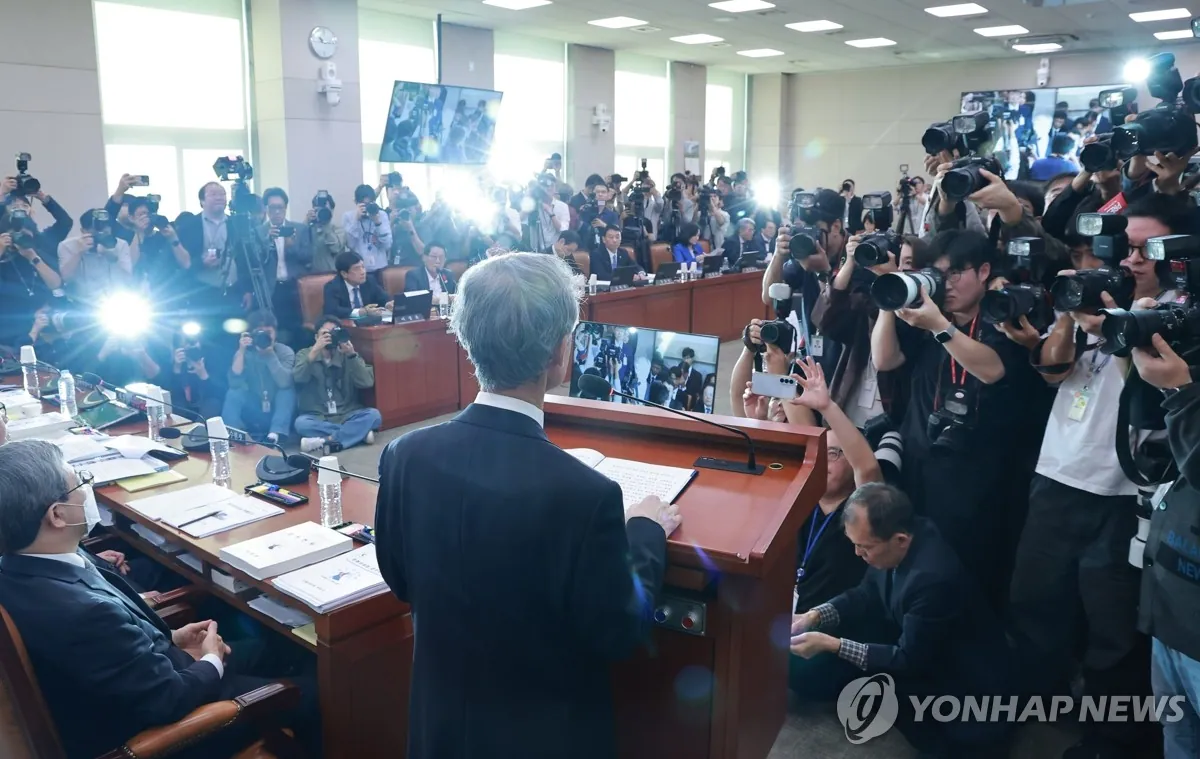
Eight of the Assembly’s 17 committees opened on the first day of an audit scheduled through October 27.
South Korea’s National Assembly began its annual audit of government agencies on October 6. The audit is scheduled to run through October 27. Eight of the Assembly’s 17 standing committees opened sessions on the first day, with lawmakers divided over a Supreme Court appointment dispute and Ukraine’s recent transfer of two North Korean prisoners of war to South Korea.
The legislation and judiciary committee discussed Supreme Court Chief Justice Cho Hee-dae’s refusal to recommend a new justice candidate at the presidential office’s request. In August, President Lee Jae Myung’s office asked Cho to submit a new recommendation after objecting to two earlier nominees. Cho rejected the request, citing a lack of constitutional grounds. He also declined to take an oath as a witness during the audit, citing separation of powers.
Lawmakers from the ruling Democratic Party demanded that Cho remain to answer questions. The main opposition People Power Party argued he should be allowed to leave after his opening remarks, in line with past practice unless the committee chair requested otherwise.
The foreign affairs and unification committee debated Ukraine’s transfer of two North Korean POWs to Seoul. Ukraine’s president disclosed the transfer last month. Seoul said the disclosure had not been agreed between the two governments and accused Ukraine of breaking a confidentiality understanding. Kyiv denied that such an agreement existed. Foreign Minister Cho Hyun said Ukraine had sent a message of apology, but that it fell short of Seoul’s expectations.
The audit also examined recent explosions of North Korean-planted land mines in the Demilitarized Zone that injured three South Korean soldiers.