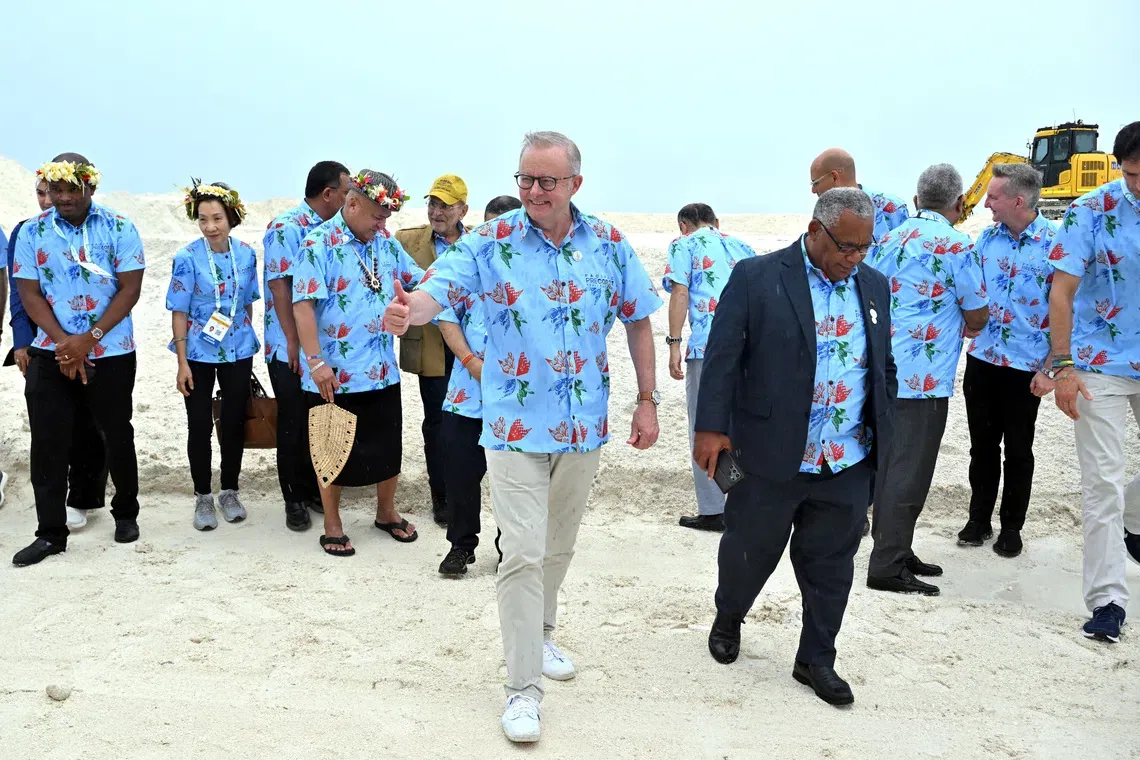
The delegation toured the atoll ahead of COP31. Scientists estimate a 99.9 per cent loss of the coral that formed the islands after a 2024 marine heatwave.
More than a dozen political leaders visited Tuvalu on October 6 to see the effects of climate change on the low-lying island nation. The trip took place during a Pacific pre-COP gathering ahead of the UN climate summit COP31, scheduled for Turkey in November.
The delegation toured the Tuvalu Coastal Adaptation Project, which aims to reclaim and strengthen land against rising seas, and met local residents. Australian Prime Minister Anthony Albanese was among the visitors. Australia is leading climate negotiations in 2026 while remaining a major coal exporter.
Tuvalu is planning for the possible relocation of its population of about 10,600 if rising seas make the country uninhabitable. Funafuti’s highest point is only about two metres above sea level. Scientists say two of the country’s nine coral atolls have already been largely inundated and fear the archipelago could become unliveable by the end of the century.
A 2024 marine heatwave is estimated to have killed 99.9 per cent of the coral that built the islands. Marine biologist Austin Bowden-Kerby described the damaged reef as “skeleton after skeleton”. Local scientist Rajneel Singh said climate change was already affecting food sources long relied on by Tuvalu’s residents.