
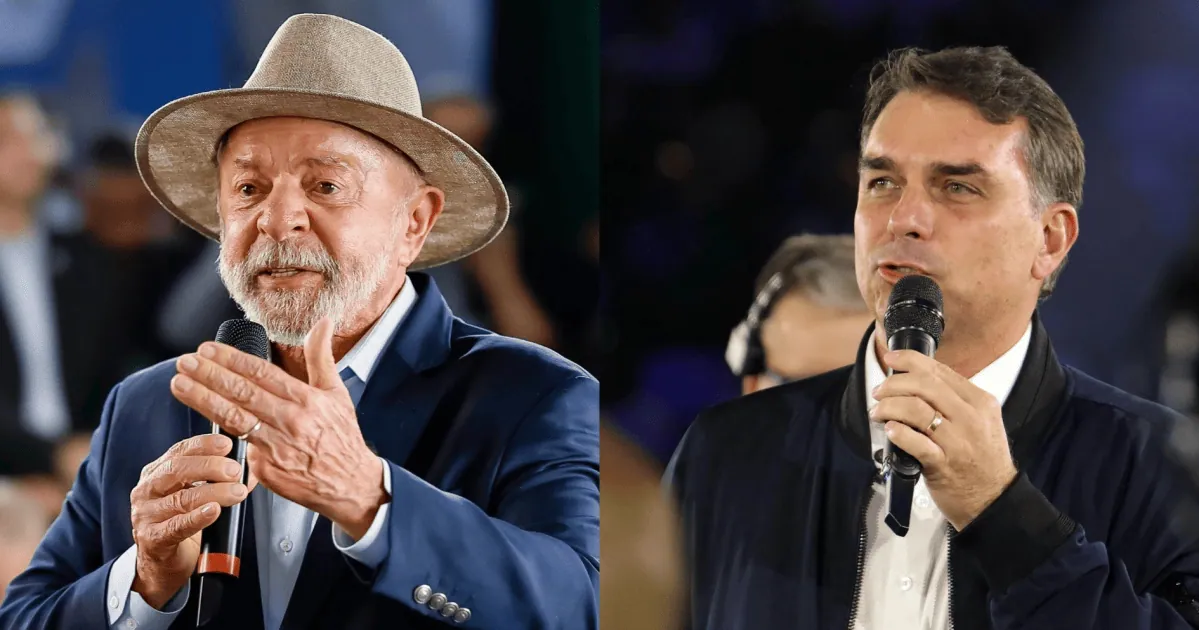
Political analyst and polling firm chief Marcelo Tokarski says the advantage currently lies with Flávio Bolsonaro’s camp, while the destination of third-party votes remains uncertain.
Marcelo Tokarski, CEO of Brazilian research firm Nexus, described the first-round presidential results as difficult for Luiz Inácio Lula da Silva. In an interview with Bastidores CNN, he said the advantage currently appears to lie with Flávio Bolsonaro’s camp. Tokarski also said Brazil had never before recorded such a narrow gap between first and second place in a presidential first round: Bolsonaro finished 2.2 million votes ahead of Lula.
Comparing the race with the 2022 election, Tokarski recalled that Lula led Jair Bolsonaro by 6.1 million votes after the first round but finished the runoff just 2.1 million votes ahead. He said Bolsonaro made up about 4 million votes. Tokarski added that no candidate who led the first round had ever lost the presidential runoff in Brazil.
A key uncertainty is where the roughly 8.8 million votes cast for candidates outside the top two will go. Tokarski said the so-called third way had reached about 12% of valid votes in polling the Monday before the election but ended with approximately 7.8%. He said it was not yet clear how voters for Renan Santos, Ronaldo Caiado, Romeu Zema, Samara Martins and other candidates would vote in the runoff. Internal polling was circulating, but published results were not yet available, he said.
Tokarski also suggested that higher abstention among lower-income and less-educated voters and people over 60 may have cost Lula votes. He noted that 20 states will not hold gubernatorial runoffs, leaving about 92% of the electorate with only the presidential race as a reason to go to the polls. In his view, both campaigns will need to appeal to voters who may reject both candidates.
Tokarski said endorsements by politicians eliminated in the first round have limited influence on voters’ choices. He expects the main contest to remain in the Southeast, where Flávio widened his margin in São Paulo, Rio de Janeiro and Minas Gerais. Tokarski said Lula’s advantage narrowed or the Bolsonaro camp’s advantage grew in 26 of Brazil’s 27 federative units. He expects Lula’s campaign to try to weaken Flávio and Bolsonarism’s image, while Flávio’s main challenge will be to avoid mistakes.