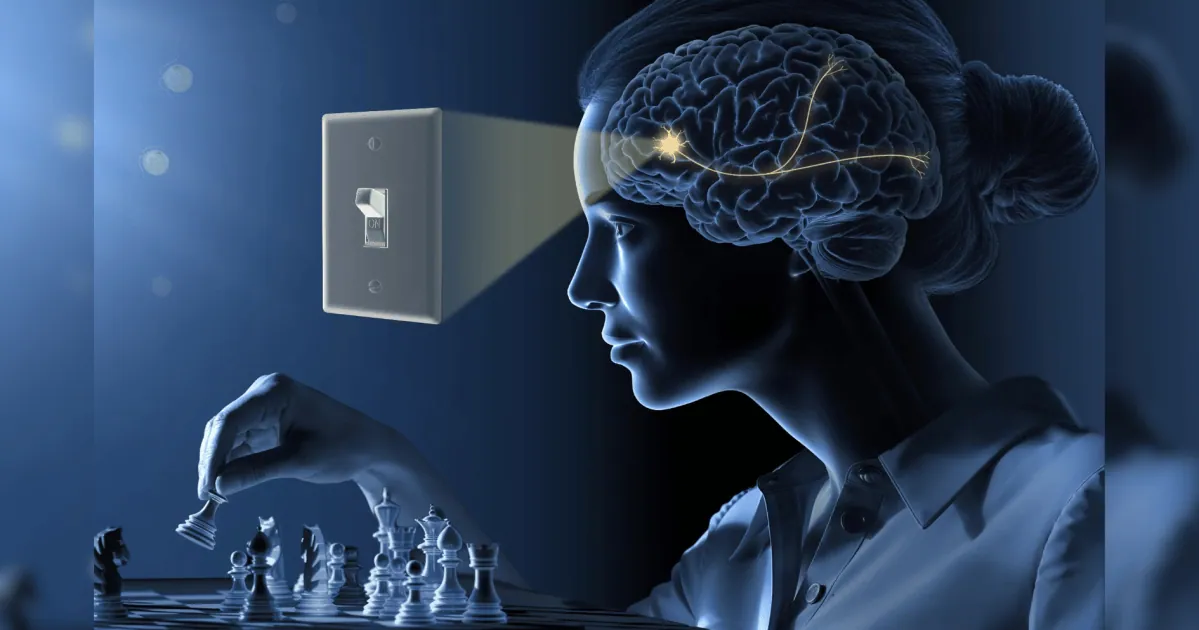
Karl Deisseroth, Peter Hegemann and Georg Nagel received the 2026 prize for discoveries that made it possible to control the activity of individual nerve cells with light. The technique helps researchers study the brain and related diseases.
The 2026 Nobel Prize in Physiology or Medicine was awarded to Karl Deisseroth, Peter Hegemann and Georg Nagel for discoveries that led to optogenetics. The method combines genetic tools and light to selectively activate or inhibit nerve cells in living brains.
Hegemann and Nagel’s research on light-sensitive proteins found in single-celled algae helped establish the field. Deisseroth and other researchers later adapted those proteins for mammalian neurons. In 2005, his group introduced the gene for channelrhodopsin into rat nerve cells. When exposed to blue light, the protein opens a channel that lets charged ions pass through and trigger an electrical signal.
In 2007, Deisseroth showed that illuminating nerve cells could control the movement of whiskers in live mice. Optogenetics gave researchers a way to target specific types of cells at high speed and investigate which neural circuits are involved in memory, behavior and disease. Researchers are also studying whether the method could help restore vision in people with some forms of blindness.
Deisseroth is a professor of bioengineering and psychiatry at Stanford University, where he earned his medical and doctoral degrees. Hegemann is a professor at Humboldt University of Berlin, while Nagel teaches molecular plant physiology at the University of Würzburg. Their work spans the discovery of light-gated ion channels and the application of those tools to neuroscience.