
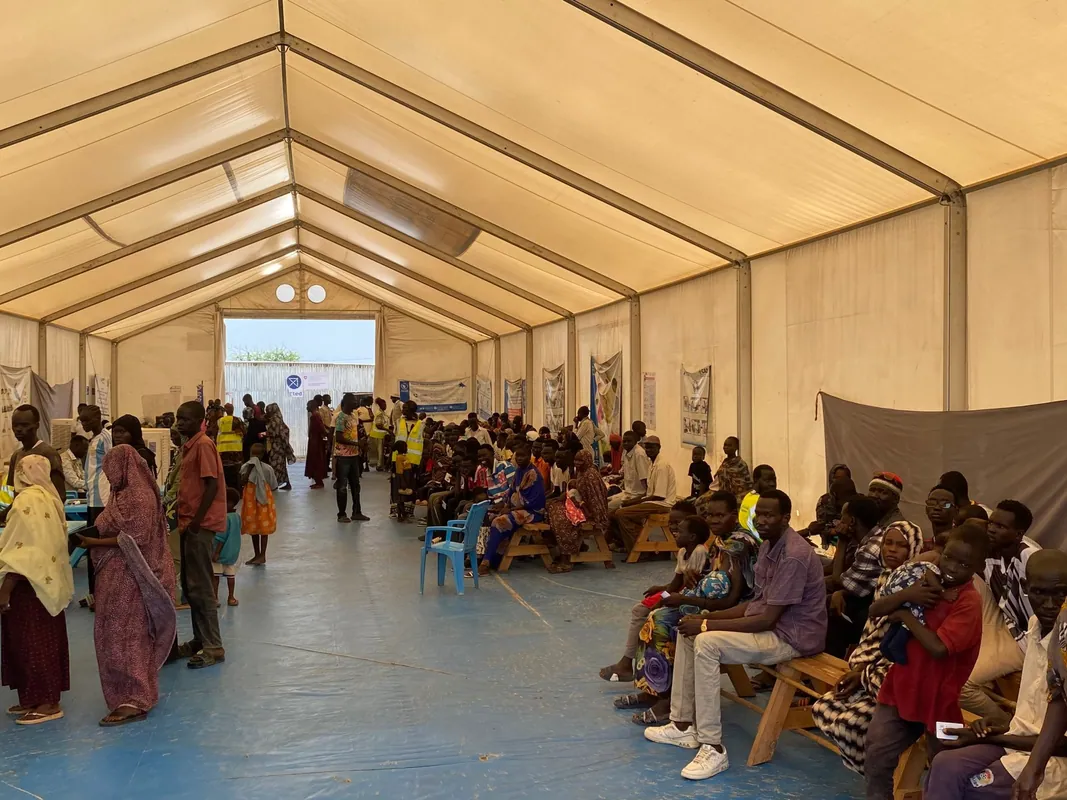
The World Food Programme says its food stocks in Malakal have dropped below 300 tonnes from 10,000 a year ago, putting assistance to more than one million people at risk.
More than one million vulnerable people in South Sudan could lose access to food and nutrition assistance unless new funding is secured, the UN World Food Programme (WFP) says. At its warehouse in Malakal, one of the agency’s main logistics hubs in Upper Nile state, food stocks have fallen from 10,000 tonnes at the same time last year to fewer than 300 tonnes.
WFP Assistant Executive Director Matthew Hollingworth described the shortfall after visiting Renk and Malakal in Upper Nile state and Pigi County in Jonglei state. Humanitarian agencies have fewer resources even as needs are growing, he said. The effects of the war in Sudan are also being felt across the border: the conflict has pushed up prices and increased pressure on South Sudan, which is receiving refugees and returnees.
About 3,000 refugees and returnees arrive in South Sudan from Sudan each week, the report says. Many are exhausted, hungry and have little money. More than 1.4 million refugees and returning residents have crossed into South Sudan since the war in Sudan began in April 2023, according to WFP. Renk, near the border, has become a major entry point.
Renk’s transit centres were not designed for the current volume of arrivals. Families wait for onward transport to Malakal and other parts of South Sudan, and some stay for months. Zainab Musa, a Sudanese refugee and mother of six, said she had travelled from the border area of Jodha to a centre to seek help, but there was little food. She plans to go to her grandfather in Bunj, in Maban County.
People already living in South Sudan are also dealing with conflict, displacement, hunger and climate shocks. In Pigi, displaced resident Peter Maker said insecurity made it difficult to farm or find work. People were heavily dependent on the United Nations, he said. Hollingworth also cited drought and areas still affected by flooding, and said illegal checkpoints needed to be addressed so aid workers could reach people across the country.
WFP says the funding shortage has already forced it to reduce rations and assistance. In August, WFP and the UN refugee agency warned that more than 650,000 refugees and asylum seekers could lose food aid without new funding. At the time, the agencies said food and nutrition assistance for the most vulnerable 240,000 refugees could run out in September.
Basic services are also under pressure. The International Organization for Migration warned that funding shortfalls put water, sanitation and hygiene services in Bentiu and Malakal at risk. In Malakal, a lack of money for drainage pumping and dyke maintenance increases the danger of flooding during the rainy season. Nearly 40,000 displaced people live in more than 6,000 households at Malakal’s internally displaced people’s settlement.
WFP estimates an immediate funding gap of $86m and a shortfall of $416m over the next six months. Its South Sudan emergency response also faces a $258m funding gap for the remainder of 2026. The agency says 7.8 million people, more than half the country’s population, face acute food shortages, while 2.2 million children are acutely malnourished.
Najah al-Tayieb al-Fadhul, a Sudanese refugee and mother of four, said she arrived at a transit centre in December 2023 after her husband was killed. She described hunger, illness and child malnutrition, as well as difficulty paying for treatment for a child with a heart condition. She said she sometimes earns about $2.50 a day at the market but cannot find stable work.
During his visit, Hollingworth described how the crisis was affecting local prices and the ability to deliver assistance. The war in Sudan had been catastrophic for the country’s north, he said, while imports had become more expensive because of difficult supply routes. At the same time, South Sudan is receiving people who themselves need food and support. In some areas, the effects of drought exist alongside places still affected by flooding.
The WFP official also pointed to illegal checkpoints that prevent aid organizations from reaching people in all parts of the country. Displaced resident Peter Maker said he could not safely farm or travel in search of work. He identified insecurity and lack of access to farmland as residents’ main problems.
Maker called for longer-term solutions. He linked some local suffering to political leadership and divisions between communities, while saying people support one another, share what they have and receive assistance only intermittently. Sudanese refugee Nura Mohammed Ahmed said food was scarce at the Renk centre. She described the difficult choice some new arrivals faced: return to a war-torn country or remain without enough nutrition.
Najah al-Fadhul said she fled with her children to South Sudan after her husband was killed and tried to find small jobs with humanitarian organizations in Renk. Despite having a college degree, she has not found stable employment. She sometimes earns about $2.50 a day at the market. She described hunger, illness and child malnutrition, and said she could not afford treatment for a child with a heart condition.