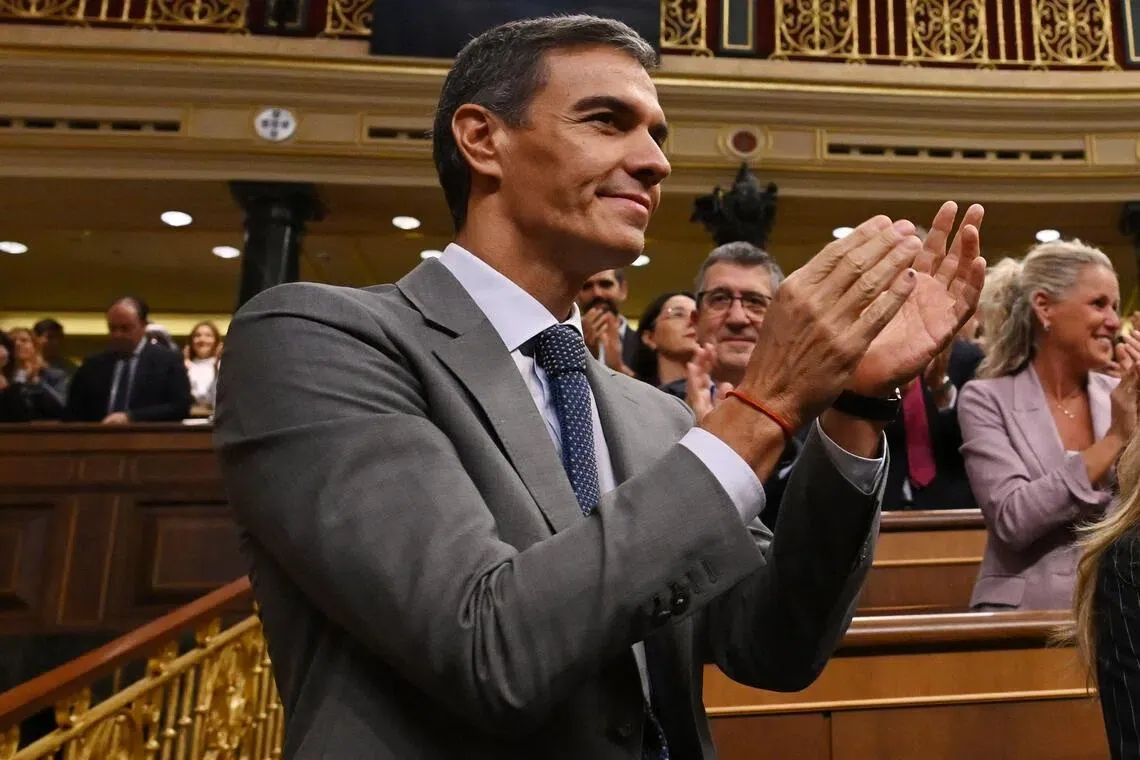
Prime Minister Pedro Sánchez has called an early parliamentary election for Nov. 29 after a fragmented parliament rejected key housing measures. Acknowledging mistakes and unfulfilled promises, he urged voters to give the left a stronger mandate.
In a televised address on Oct. 5, Sánchez said Spain needed to renew public support and elect a larger progressive majority able to advance social reforms. He acknowledged that some of his supporters were dissatisfied and that his government had fallen short of campaign commitments.
The decision followed parliament’s rejection of measures intended to address the housing crisis. Right-wing lawmakers blocked the package on Oct. 2, prompting fresh protests. Housing is one of the few issues on which the Socialists hope to mobilise their base.
Calling an early vote is a gamble for Sánchez. His Socialist Party trails in opinion polls, and corruption allegations involving senior party figures have further weakened its standing over the past year. Reuters reports that the party’s approval has hovered between about 26 and 31 per cent during his tenure.
Polls point to a government led by the conservative People’s Party with support from Vox as the likeliest outcome. Such a coalition could bring a far-right party into Spain’s central government for the first time since the return of democracy. Sánchez has repeatedly confounded predictions by assembling fragile alliances ranging from the far left to Catalan separatists.
His third government has struggled to pass legislation and has not secured a budget since 2023, despite Spain’s strong economic performance. Sánchez took office in 2018 after Mariano Rajoy was ousted amid a corruption scandal in the People’s Party. He won another term in 2023 after reaching an agreement with Catalan parties that included an amnesty for separatist leaders, a deal many voters still regard as a concession.
During the campaign, Sánchez can point to a labour reform after which unemployment fell below 10 per cent, as well as his humanitarian approach to migration. His positions on defence spending, China and migration have also drawn criticism. Economist Lorenzo Bernaldo de Quirós called housing a “window of opportunity” for the prime minister, warning that migration and corruption would return to the centre of debate if he delayed calling an election.