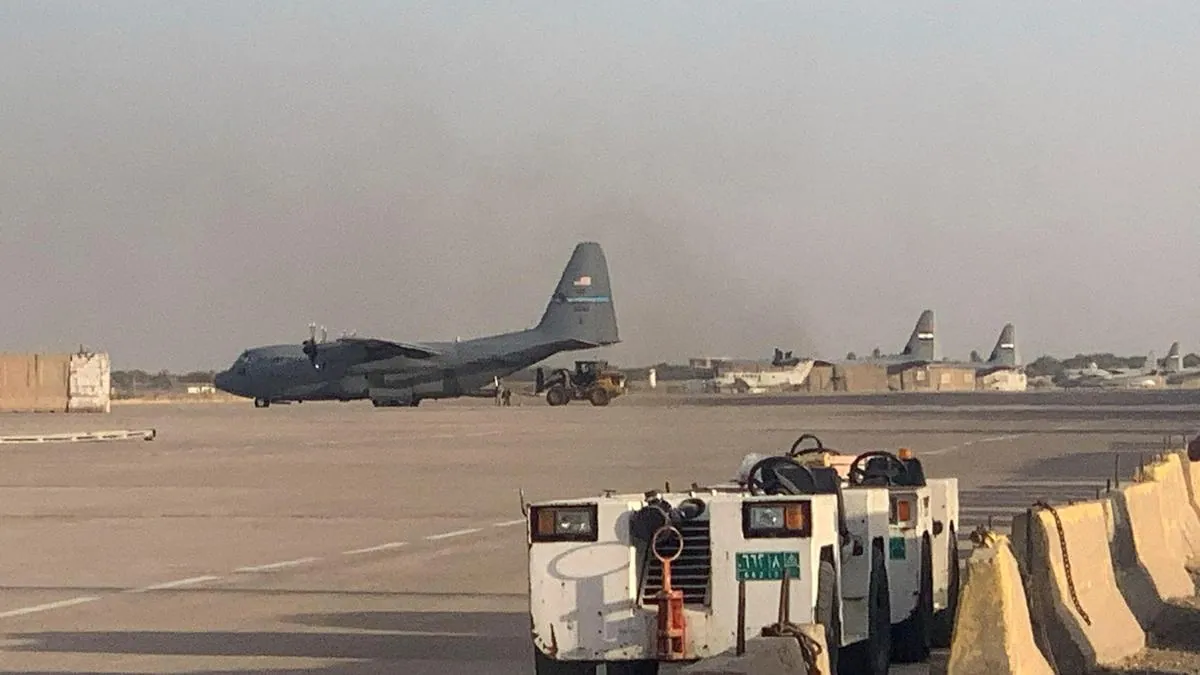
Washington has completed its troop pullout from the last U.S. base in Iraq’s Kurdistan region, handing it to Iraqi forces. Baghdad called the move a step towards sovereignty, while some Iraqis fear that reduced U.S. support could embolden Iran-aligned groups and Islamic State sleeper cells.
The U.S. military announced on Sept. 30 that its troops had left the last base where they remained in northern Iraq. Pentagon spokesman Sean Parnell said personnel and equipment completed an orderly departure from the air base in Erbil. The move ended a 12-year U.S.-led coalition mission against Islamic State in Iraq.
Prime Minister Ali al-Zaidi described the handover as the start of a new phase centred on Iraqi sovereignty and stronger state institutions. Iran-backed armed groups also celebrated the withdrawal. For many Iraqis, it fulfils a long-standing demand for foreign forces to leave.
Others, especially in the Kurdish region, consider the pullout premature. Sunni tribal leader Abdulrahman al-Zobaie told Reuters that Iraq was not yet fully ready to take over security and warned that the coalition’s departure could create a vacuum. Iraqi security officials also fear that losing U.S. intelligence, logistics and drone support could help Islamic State sleeper cells revive.
The U.S. military presence has shifted repeatedly. American forces invaded Iraq in 2003, left at the end of 2011, then returned at Baghdad’s request in 2014 after Islamic State seized large areas. Iraqi forces, backed by the coalition, defeated the group in a major campaign from 2014 to 2017, but its underground network survived.
The withdrawal is taking place amid the continuing U.S.-Iran war, whose effects have at times spilled into Iraq. The country has maintained close political and military ties with both Washington and Tehran, while its territory has also become a stage for attacks. Kurdish commander Sirwan Barzani said signs of Islamic State sleeper-cell activity had increased in recent weeks. Iraqi forces said they had foiled a planned suicide attack linked to the withdrawal date.
Baghdad says the demobilisation of armed groups has begun and has set a new target of June 2027. Some factions agreed to surrender weapons, but powerful Iran-aligned groups rejected calls to disarm, saying resistance would continue while U.S. forces remained in the region. Iraqi officials said the sides agreed to a 90-day pause in attacks. Its durability may depend on how the wider conflict develops.