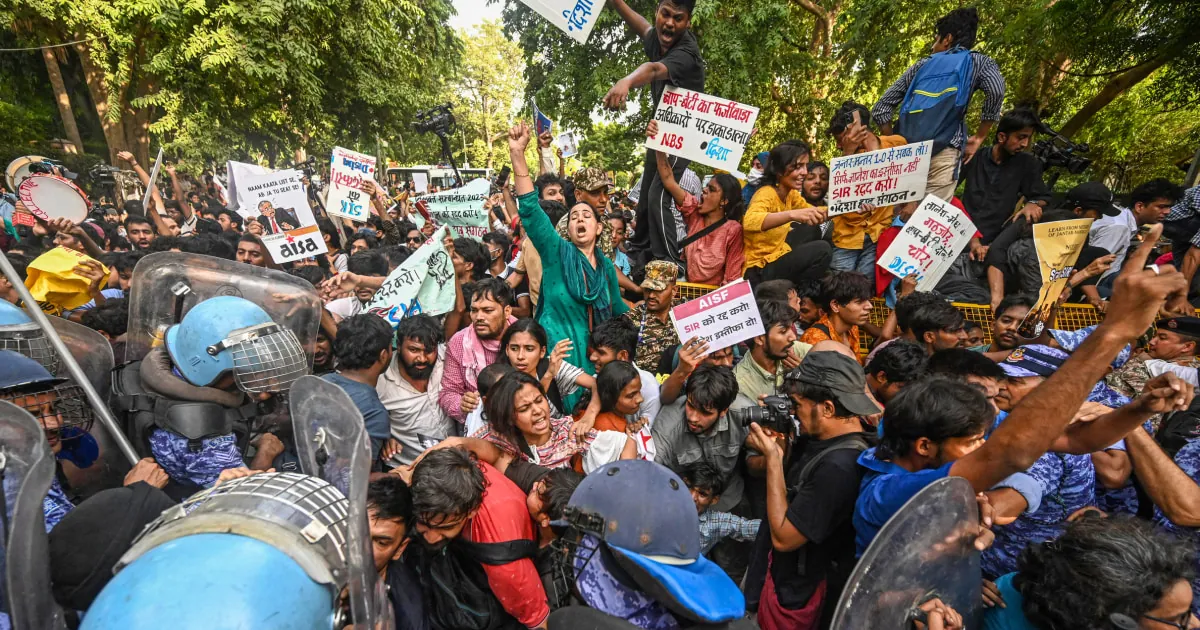
Opposition parties and civil groups say the voter-roll revision could disenfranchise vulnerable communities. The government and election commission deny political interference.
Protests in India have called for the resignation of Chief Election Commissioner Gyanesh Kumar and an end to a voter-roll revision. Opposition parties and civil society groups say the process could remove millions of people from voter lists and benefit Prime Minister Narendra Modi’s ruling Bharatiya Janata Party (BJP). The Election Commission and government deny wrongdoing.
The dispute centres on the Special Intensive Revision (SIR), which began in Bihar last year and has since expanded to most Indian states and federally administered territories. Voters are being asked to provide documents confirming their eligibility to remain registered. The commission says the exercise is meant to remove duplicate and ineligible entries. Critics warn that poorer and other vulnerable groups may struggle to produce older records and could be wrongly excluded.
The issue was prominent in West Bengal’s election, after about 9 million names — roughly 12% of the electorate — were removed from the rolls. The Associated Press reported that millions of deletions involved people listed as deceased, absent or requiring further verification. Opposition parties link the changes to the BJP’s victory in the state, while the party and commission reject claims of political motivation.
The latest demands also follow an Indian Express report about disagreements within the commission. The newspaper said two of its three commissioners objected to decisions concerning voter-roll revisions, registration and digital systems. The commission described the exchanges as differences of view during deliberations, rather than formal written objections. Commission data suggests rolls in some regions could shrink by as much as 30%. Reuters reported that opposition lawmakers were detained during a march in New Delhi on Oct. 6.