
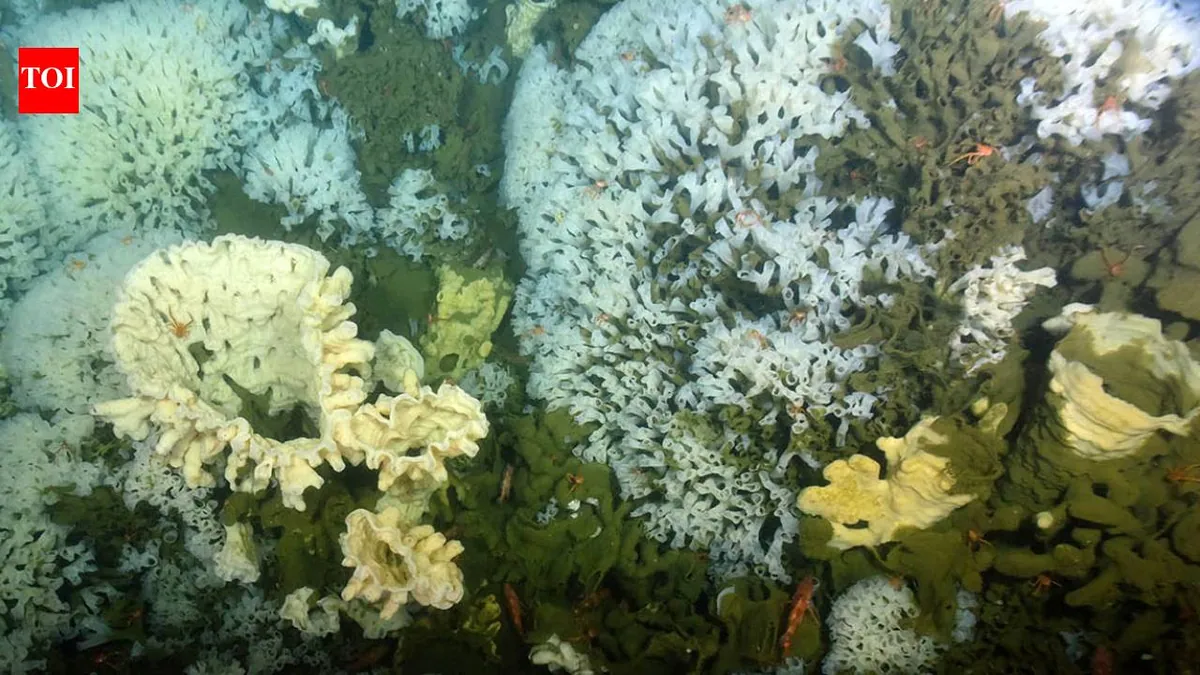
Scientists discovered living reefs in Hecate Strait in 1987, overturning the belief that they had gone extinct about 40 million years ago. Some formations are more than 9,000 years old and remain vulnerable to damage.
Deep off British Columbia, reefs built by glass sponges—marine animals with silica skeletons—are still alive. Canadian scientists discovered four major complexes in Hecate Strait in 1987. They were living examples of reefs thought to have disappeared tens of millions of years ago, and are more than 9,000 years old.
The sponges filter seawater, while new generations settle on the skeletons of earlier ones, gradually forming mounds and ridges. Fisheries and Oceans Canada says the reefs can reach 25 metres high and lie at depths of roughly 140 to 240 metres. The main complexes in Hecate Strait and Queen Charlotte Sound cover about 1,000 square kilometres.
They need cold water, nutrients and dissolved silica to grow. The reefs provide shelter and habitat for fish and shellfish, including young animals. The sponges create complex ecosystems on areas of seafloor that would otherwise be relatively flat.
The reefs are highly vulnerable to damage. Fishing gear and seafloor activity can break their skeletons, while disturbed sediment can smother the sponges. Individual animals can live for more than 200 years, and recovery from major damage may take decades or centuries. Researchers are also studying the effects of warming and changes in ocean chemistry.
Canada established the Hecate Strait and Queen Charlotte Sound Glass Sponge Reefs Marine Protected Area in 2017, covering about 2,410 square kilometres. The designation is intended to conserve biodiversity and ecosystem functions; the reefs are also on Canada’s tentative list for possible UNESCO World Heritage recognition.
Most reefs are too deep for recreational diving. In Howe Sound they can occur at about 22 metres, and near Halkett Point by Gambier Island at roughly 30 metres. The marine protected area there was expanded in 2016 to protect the reef.