
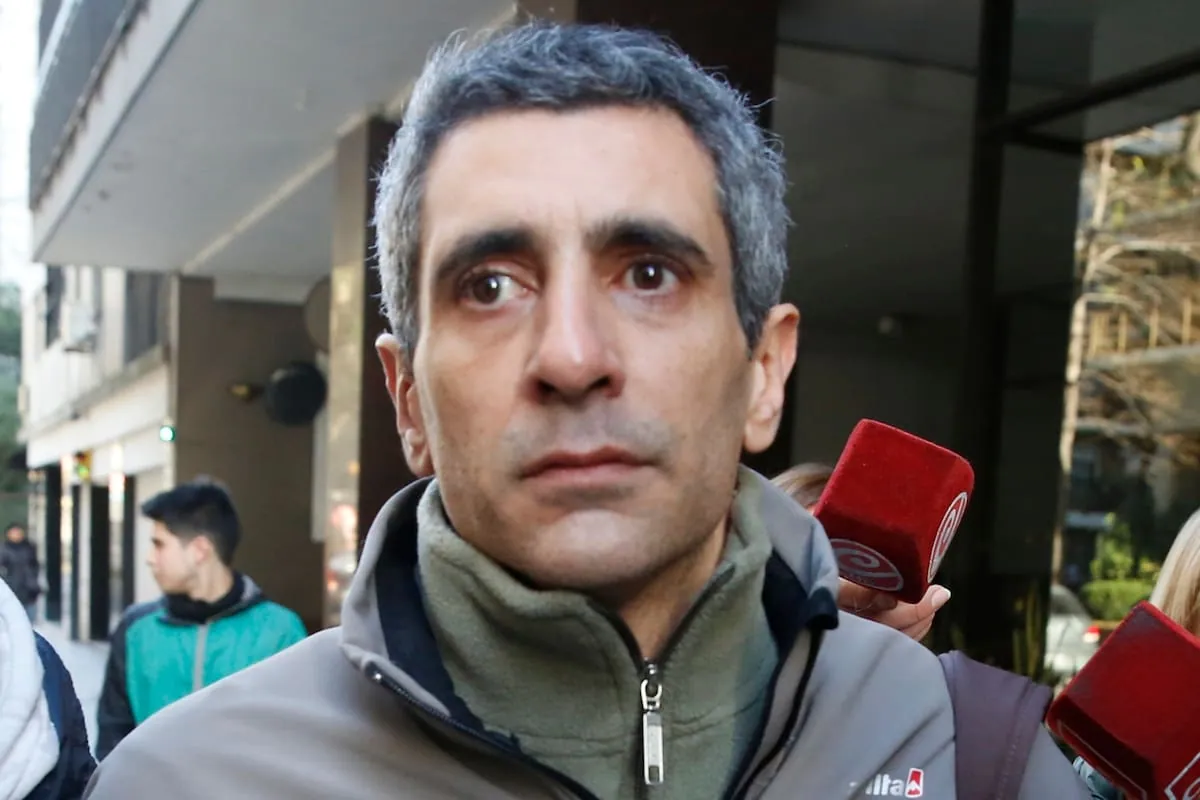
Federal Judge Julián Ercolini charged former official Roberto Baratta with illicit enrichment and ordered an asset freeze of up to 1.5 billion pesos. Baratta remains free, and the case has not resulted in a final conviction.
Federal Judge Julián Ercolini has brought former deputy planning minister Roberto Baratta into a criminal case on illicit-enrichment charges and ordered an asset freeze of up to 1.5 billion pesos. The ruling was issued without pretrial detention, so Baratta remains free. It is not a final conviction.
The investigation covers 2003 to 2017. Baratta served as a deputy planning minister through December 2015 and remained a public official for two years after leaving the post. Ercolini said Baratta’s wealth grew substantially during that period and was not explained by lawful income.
The central issue is a house in the Mapuche gated community in Pilar. The defense said Baratta’s mother, Marta Rosa Girola, owned the property. The ruling says the lot was bought for $70,000 in cash before a house of about 380 square meters, with a basement and two floors, was built. Architect Diego Manuel Gómez said Baratta gave him instructions directly and that he received about 3.7 million pesos in roughly 30 cash payments. Baratta or his private secretary, Nelson Javier Lazarte, delivered the money.
Gómez said he did not know Baratta’s mother and had seen his father at the construction site only a few times. The case file says invoices from the construction company were issued to Baratta, while he and his wife, Dalina Bielle, covered expenses at the gated community and payments for the house. Cable and internet service had been registered to Baratta’s driver, Oscar Centeno, since 2015. Centeno’s notebooks gave their name to a separate case involving alleged kickbacks in public works.
Baratta’s mother signed an offer to donate the property to him in 2013. Ercolini described the document as a legal device intended to place the house formally in her son’s assets. The judge noted that the file contains no evidence that Baratta accepted the donation.
The judge also listed an apartment in Belgrano bought in 2010 for $220,000, with $215,000 reportedly paid in cash. Two more apartments with parking spaces on Thames Street are registered in Baratta’s wife’s name. The list also includes four cars, bank deposits and safe-deposit boxes, overseas travel and tuition at Belgrano Day School. During a search in another case, authorities seized €27,500 and $25,276 in cash from his home.
A court accountant found negative balances between income and spending in 2005, 2008 and 2010, and every year from 2012 through 2017. Published accounts give different totals, ranging from 4.29 million to 4.68 million pesos. The calculations use the prices of the relevant years and do not account for inflation. Ercolini called the discrepancy a floor. He said it deepened after the lot was bought and the house was built, and became most significant in 2017, when cash was seized during a search.
At a Sept. 16 hearing, Baratta said the judge lacked impartiality. He argued that his assets were explained by his salary, his wife’s income and his parents’ resources. He said his parents bought the house with money his father received on retiring from energy company Edenor. Baratta said the house was built because of his sister’s illness and was meant to give her a place to rest. He said the seized euros and dollars belonged to his mother-in-law and came from an inheritance.
Ercolini said some family resources had been established but found no evidence that they had paid for the disputed purchases. Illicit enrichment carries a possible sentence of two to six years in prison and a lifetime ban from public office.