
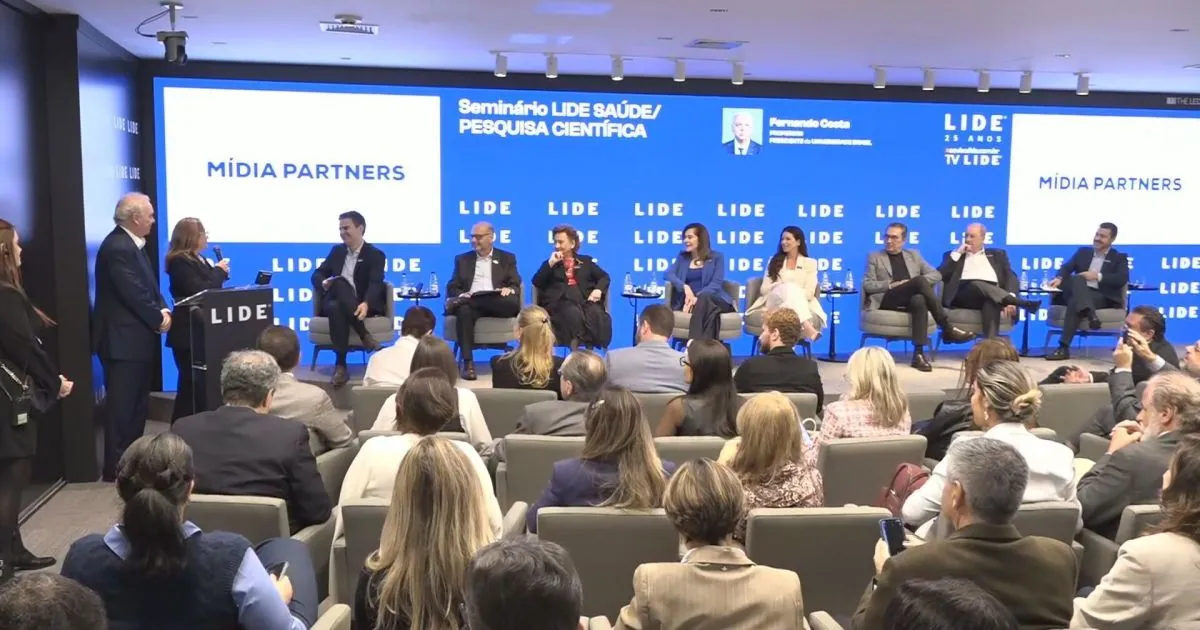
A São Paulo seminar addressed risk prediction, telemedicine, longevity and research. Participants said technology should support doctors’ work.
Doctors, researchers and technology executives discussed artificial intelligence and robotics in medicine at a Lide seminar held in São Paulo on October 6. Topics included preventive systems linking a patient’s health information over time, telemedicine and longevity research.
Carlos Carvalho of the University of São Paulo medical school said connected regional and national databases could help identify risks earlier and support intervention before a patient’s condition worsens. Genetic information and life circumstances, including premature birth, childhood illness and air pollution, could contribute to such predictions. The systems still need more data and are being tested.
Carvalho described an obstetric tele-ICU project that monitored critically ill pregnant women around the clock during the pandemic. He said one in two patients was saved. The initiative for Brazil’s public health system was approved in 2024 and is awaiting funding for 2026. First tests of new connected technologies could begin by 2030, he said.
The seminar also covered a University of São Paulo study of 230 centenarians, 171 women and 59 men, investigating biological factors associated with healthy ageing and preserved cognitive ability. CNN Brasil also mentioned the Delphi system, which estimates risks for more than 1,000 conditions up to 20 years ahead, and a mouse experiment using Zika virus against brain tumours; the report did not provide enough detail to independently assess the latter.
Fiocruz researcher Margareth Dalcolmo called for training doctors to use AI while preserving time for patient care and clinical judgement. Technology consultant Tânia Cosentino advocated a national strategy, data centres, workforce training and domestic medical-equipment development. Participants discussed AI’s potential for management and research while stressing investment, reliable data and scientific infrastructure.