
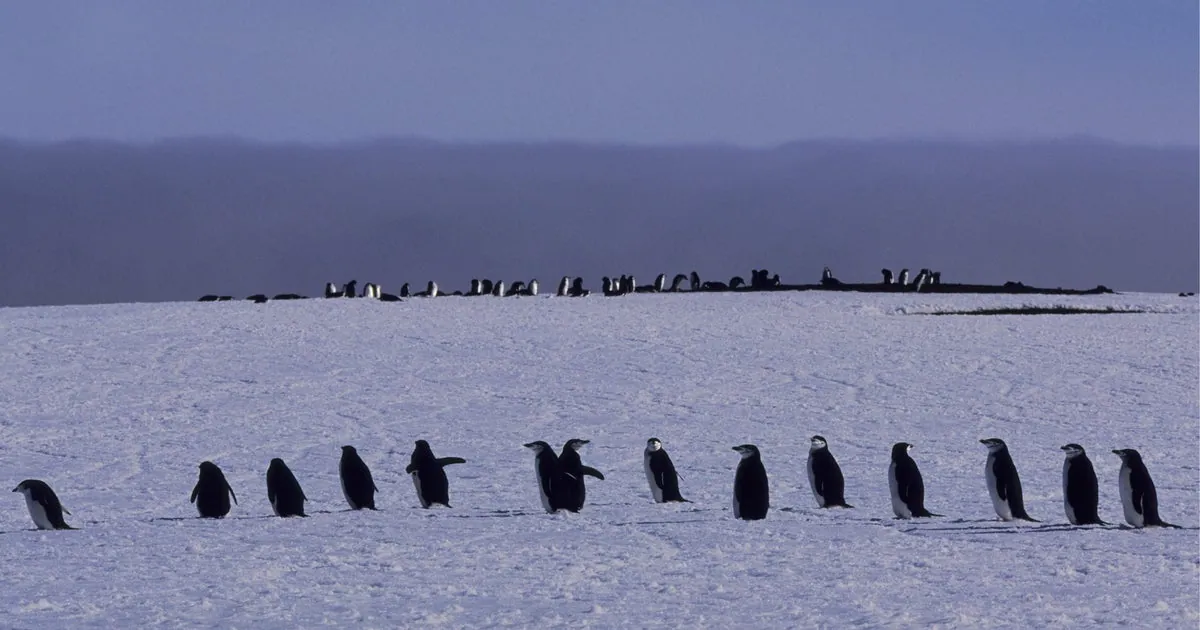
The chinstrap penguin population on Zavodovski Island fell by about 63% from 2011 to 2025, costing the island its status as the world’s largest penguin colony, according to a British Antarctic Survey study.
Researchers compared satellite and drone images. The study estimates that the number of breeding chinstraps fell from about 1.09 million in January 2011 to 402,000 in 2025, a loss of more than 680,000 birds over 14 years. Lead author Norman Ratcliffe of the British Antarctic Survey described the decline as very rapid.
Macaroni penguins increased on Zavodovski over the same period, rising from about 338,000 to 433,000 and overtaking chinstraps. Together, the two species now number more than 835,000 on the island. Researchers say the world’s largest colony is now the Adélie penguin colony at Cape Adare, which numbered more than one million birds in 2018.
The chinstrap decline began before Mount Curry erupted in 2016 and continued afterward. The ash plume moved northeast over an area not inhabited by the birds. The study’s authors say the eruption was not the main cause of the population drop.
Instead, the researchers link the decline to reduced krill availability. The small crustaceans are a main food source for chinstraps, and warming ocean temperatures are shifting them south. The island’s chinstrap population has fallen by about 7% a year since 2011. Macaroni penguins eat a wider range of prey, and their numbers increased over the same period.
The researchers say climate change may be altering food webs in ways that harm chinstraps while favoring macaroni penguins. They suggest that the International Union for Conservation of Nature consider moving chinstraps from “least concern” to “endangered.” That is the scientists’ recommendation, not a status change already adopted by the conservation body.