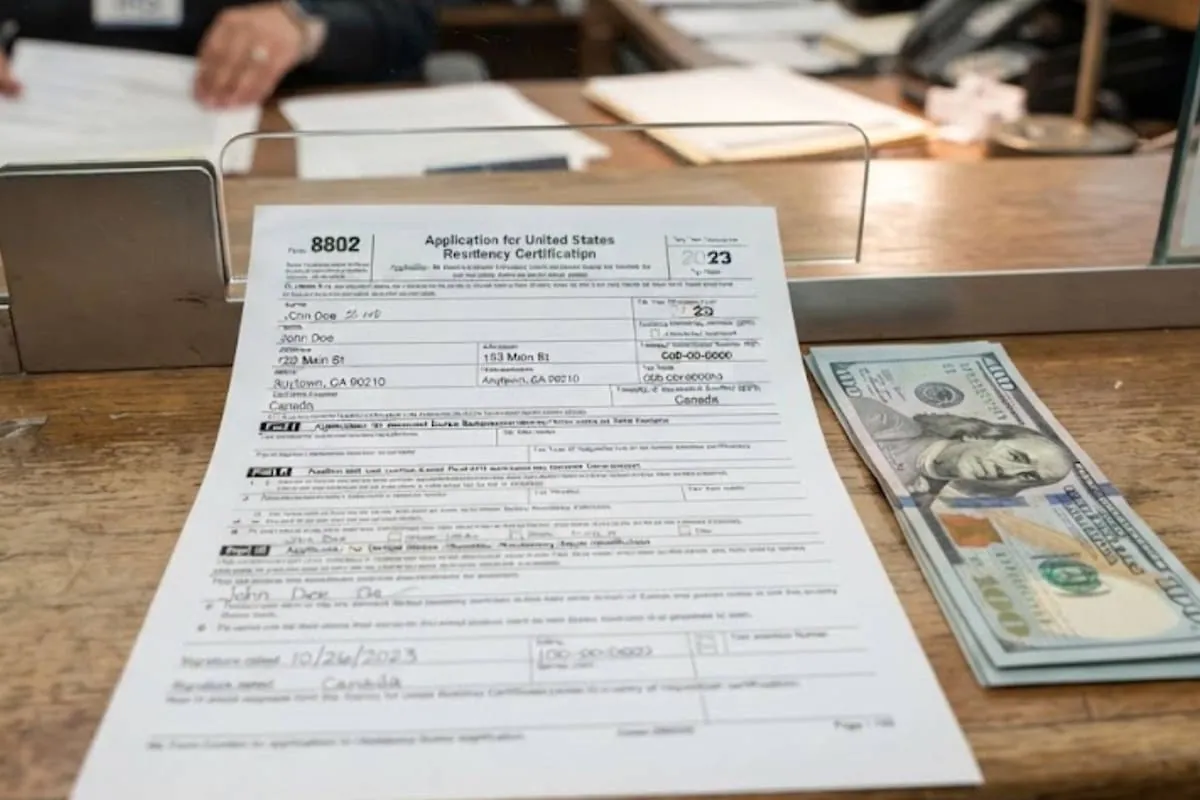
Since October 1, Form 8802 costs $105 for individuals and $230 for companies and other entities. The applicable fee is determined by the postmark date, not by the number of certificates issued.
The U.S. Internal Revenue Service has raised the fee for processing Form 8802, used by individuals and entities to request a U.S. tax residency certificate, Form 6166. Since October 1, the fee has been $105 per application for individuals, up from $85, and $230 for businesses and other non-individual applicants, up from $185. The IRS says the new rates apply to applications postmarked on or after October 1, 2026.
Form 6166 can document U.S. residency for tax-treaty benefits abroad, including certain reductions or exemptions from withholding on foreign income. It may also be used to seek some VAT exemptions. It does not prove that U.S. taxes were paid for purposes of claiming a foreign tax credit.
Applications postmarked before October 1 remain subject to the previous fees. For some filings, the IRS uses the date sent through an approved private delivery service or, for faxed applications paid through Pay.gov, the payment date when a confirmation number is included. The IRS says fiscally transparent entities pay one $230 fee per Form 8802 under their EIN, regardless of how many owners or beneficiaries are covered. Fees are generally non-refundable, with limited exceptions for mathematical errors or overpayments.
The IRS encourages applicants to combine requests for different countries or periods on one Form 8802 because the charge applies to the application, not to each certificate issued. To obtain Form 6166, applicants must show they filed the relevant U.S. tax return or have a valid reason for not filing. Those who were required to file but did not, and some taxpayers who filed as non-residents, generally do not qualify.