
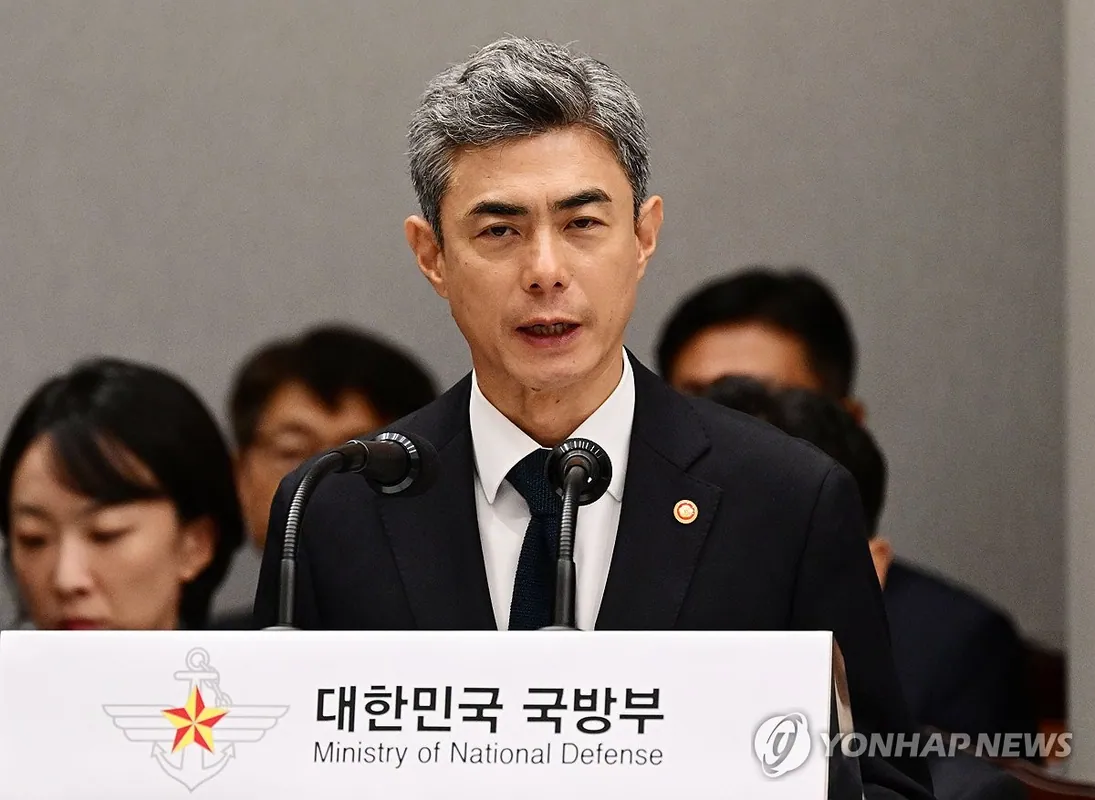
Defense Minister Kang Shin-chul said Pyongyang appeared surprised by Seoul’s investigation findings and mine-clearing operation. North Korea denies responsibility.
South Korean Defense Minister Kang Shin-chul said Pyongyang appeared “quite flustered” by Seoul’s final findings on a mine blast near the inter-Korean border and the subsequent mine-clearing work. Yonhap reported that Kang made the remarks during a parliamentary audit on October 7. North Korea has denied responsibility and called Seoul’s findings a “farce.”
Seoul said a joint investigation with the U.N. Command, together with forensic analysis of material found on injured soldiers’ uniforms, linked the September 21 blast to mines planted by North Korean troops. The Associated Press reported South Korea’s final assessment that three soldiers were injured. Yonhap’s report says two were seriously hurt. Pyongyang rejected the accusation.
Kang told lawmakers that South Korea considers the mine-clearing operation at the site complete, while acknowledging that other mines may remain south of the military demarcation line. He said further joint verification with the U.N. Command was needed and did not identify all areas where mines may have been planted. Further steps, he said, would follow completion of that work.
South Korea’s Defense Ministry views the suspected mine-laying and border crossing as possible violations of the 1953 armistice. Seoul wants to formally record that position and demand that North Korea stop border incursions and restore the Demilitarized Zone to its original condition. The ministry is also proposing inter-Korean military talks on preventing accidental clashes, reopening communication hotlines and aligning border markers.
Disagreement over the precise location of the line remains a source of tension. The 1953 armistice established 1,292 markers; Yonhap says about 200 remain identifiable. South Korea, the U.N. Command and North Korea rely on different mapping references. Seoul’s ministry also plans to coordinate with the U.N. Command over other moves affecting the buffer zone.
Kang also said Seoul plans to accelerate the transfer of wartime operational control from Washington to South Korea. The ministry will pursue a roadmap, including certification of full operational capability, and consult Washington on establishing a permanent combined special operations component command by year-end. The plan is part of broader preparations for the allies’ command transition.