The rideshare flight carried Dhruva Space’s LEAP-2 platform, SatLeo Labs’ thermal payload TAPAS-1 and MOI-1A, a satellite designed to run AI models in orbit.
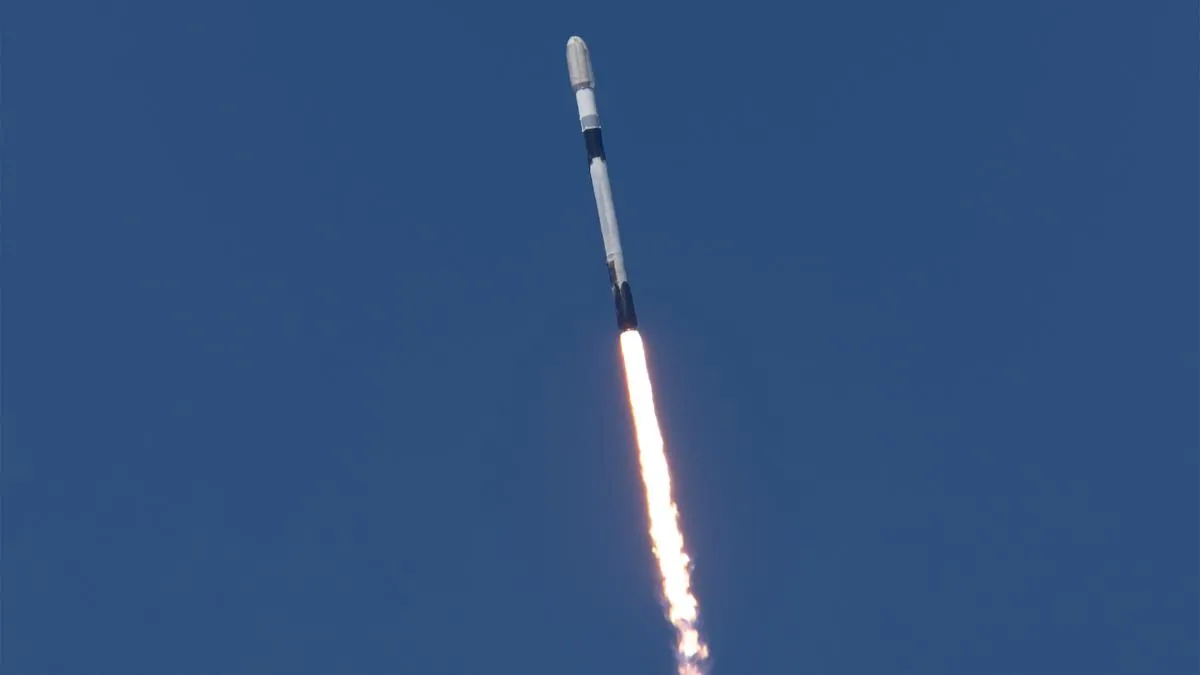
Several payloads developed by Indian companies were deployed in orbit by SpaceX on October 2 as part of the Transporter-18 rideshare mission. A Falcon 9 launched from Space Launch Complex 4E at Vandenberg Space Force Base in California. The flight carried 130 payloads in total.
Dhruva Space’s LEAP-2 platform hosted several in-orbit demonstrations, including a star tracker from France-based Sodern ArianeGroup and TAPAS-1, a thermal payload developed by India’s SatLeo Labs. Dhruva said it completed the satellite’s integration with the launch vehicle, building on its earlier LEAP-1 mission. It plans to support LEAP-2 through its expanding ground network, including a station in Luleå, Sweden.
SatLeo Labs calls TAPAS-1 India’s first dedicated commercial thermal payload in the CubeSat category. Its thermal infrared sensor is designed to capture temperature patterns not visible to conventional optical cameras. The mission is intended to test the sensor, payload performance and data processing in orbit.
TakeMe2Space’s MOI-1A is designed to process Earth-observation imagery and run artificial intelligence models while in orbit. The company says the 14-kilogram satellite carries 117 trillion operations per second of computing capacity, 2 terabytes of storage and a nine-band multispectral imager. Onboard processing could reduce the amount of raw imagery that has to be sent to Earth.
Pawan Kumar Goenka, chair of India’s National Space Promotion and Authorisation Centre, called the deployment significant for the country’s private space sector. In a post cited by The Hindu, he said the mission brought together thermal imaging, onboard computing and an Indian-built platform to host payloads.