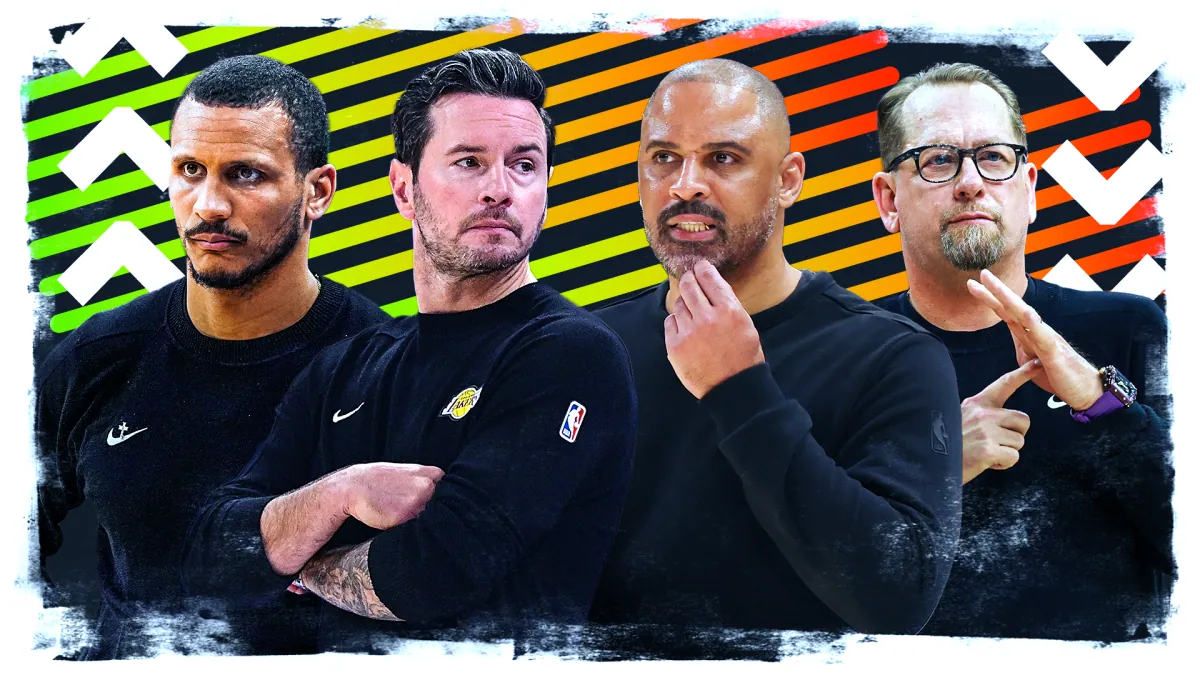
Mark Daigneault and Erik Spoelstra follow Carlisle in the outlet’s list. Its writer weighs playoff results, recent performance, tactical flexibility, player development and roster management.
CBS Sports ranks Indiana’s Rick Carlisle first among NBA head coaches for 2026-27, followed by Oklahoma City’s Mark Daigneault and Miami’s Erik Spoelstra. The list is the writer’s assessment, not an official league ranking: rosters, resources and the unseen work of coaching all shape results.
The author weighs regular-season and playoff records, performance against expectations, tactical creativity, player development, rotations and team management. Recent form and playoff performance receive particular weight. CBS cautions that a low position does not mean a coach is poor; nearly all NBA head coaches are capable, but they work in very different circumstances.
Ranks 30–26: Sacramento’s Doug Christie is last after the Kings’ difficult season, weak offense, defense and rebounding, and a league investigation into a suspicious foul against Golden State. Washington’s Brian Keefe is 29th: the Wizards are rebuilding and still lack clear strengths. First-time coaches Sean Sweeney of Orlando, 28th, and Portland’s Micah Nori, 27th, are hard to judge, though both have strong reputations as assistants; Nori also gained playoff experience in 2024 when he took on a larger in-game role with Minnesota. Dallas’ Dusty May, 26th, has college head-coaching experience, but moving to the NBA is a separate test.
Ranks 25–21: New Orleans’ Jamahl Mosley is 25th after Orlando’s offensive problems and its 3-1 series lead collapse against Detroit in the 2026 playoffs. Memphis’ Tuomas Iisalo, 24th, used short shifts to preserve players’ energy, but the approach frustrated key players. Denver’s David Adelman, 23rd, did not resolve the team’s defensive issues or its surprising loss to Minnesota, although Nikola Jokić makes a coach’s contribution to the offense difficult to isolate. Brooklyn’s Jordi Fernandez, 22nd, showed promise with a defensive system despite a limited roster. Chicago’s Tiago Splitter, 21st, is credited for stepping in without a training camp and with an injured team, though the author notes the small sample.
Ranks 20–16: Detroit’s J.B. Bickerstaff, 20th, quickly improves young teams’ defense, but his playoff record is less convincing. Phoenix’s Jordan Ott, 19th, improved effort and took the Suns’ defense to ninth. Philadelphia’s Nick Nurse, 18th, has championship experience, but the writer criticizes his heavy use of starters and poor after-timeout offense. Houston’s Ime Udoka, 17th, is strong defensively and at building culture, but his offense was too stagnant last season. Milwaukee’s Taylor Jenkins, 16th, developed players in Memphis; his new job will show how much of that success transfers to another club.
Ranks 15–11: Cleveland’s Kenny Atkinson, 15th, is praised for pick-and-roll offense and player development, but his teams have not impressed in the playoffs. Toronto’s Darko Rajaković, 14th, pairs ball movement with few turnovers and develops young players. Atlanta’s Quin Snyder, 13th, adapts his style to his roster, but needs spring success to rise further. Golden State’s Steve Kerr, 12th, is a four-time champion with a distinctive system that depends heavily on Stephen Curry. Charlotte’s Charles Lee, 11th, climbed after a strong offensive finish and emphasis on rebounding.
Ranks 10–6: Utah’s Will Hardy, 10th, earns credit for offensive creativity; now that the Jazz are trying to win, his results will be easier to assess. San Antonio’s Mitch Johnson, ninth, reached the Finals in his first full season, though the series featured questionable decisions. The Lakers’ JJ Redick, eighth, found answers for an imbalanced team and had a strong playoff run despite injuries to stars. The Clippers’ Ty Lue, seventh, is recognized for after-timeout plays and playoff adjustments. Minnesota’s Chris Finch, sixth, tailors systems to players and regularly exceeds expectations in the postseason.
The top five: New York’s Mike Brown, fifth, improved ball movement and bench use without abandoning the Knicks’ strengths, and his playoff decisions helped the team win key games. Boston’s Joe Mazzulla, fourth, is one of the strongest regular-season coaches: the Celtics take many threes, protect the ball and attack the offensive glass. The writer also recalls several playoff exits in which the team failed to adjust.
Spoelstra, third, is recognized for two championships, six Finals trips and Miami’s player development. The Heat have nevertheless reached the play-in tournament for four straight seasons, and late-game management has become less reliable. Daigneault, second, built a durable Thunder culture and defense that can remain effective without stars; questions remain about some playoff decisions and how to separate coaching from the roster advantage.
Carlisle takes No. 1 for tactical flexibility and his ability to take teams beyond expectations in the playoffs. The author points to different offenses built around Luka Dončić and Tyrese Haliburton, unconventional schemes and player development, including Jalen Brunson, Aaron Nesmith and Obi Toppin. In CBS’s view, Carlisle’s willingness to adapt to his roster is the central argument for the top spot.