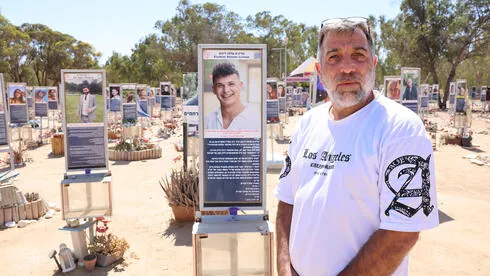
In an interview marking the third anniversary of the attacks, Davidian recalled making 15 trips into danger to rescue Nova festivalgoers and the people he could not reach in time.
On October 7, 2023, Oz Davidian was at home in Moshav Maslul with his wife and daughters when an unusually heavy barrage began. During a lull, his sister told him that frightened young people near the Nova festival had reached her husband’s farm and were asking for help. Davidian asked his family to stay home, loaded water into his four-wheel-drive pickup and headed toward the area, choosing open terrain over the roads.
At the farm he learned that the young people had fled the festival. He drove repeatedly into the danger zone and brought them out, sometimes under fire. Survivors passed him new locations of people still hiding, and he planned routes between them. Davidian says he made 15 trips into the area and rescued 120 people alive. At some places he found people who could still be evacuated. At others he found people who had been killed or hiding places that were empty because those sheltering there had fled.
He photographed himself with some of the people in his truck, he said, so their identities could be known if they died and to alert others to the scale of the attack. He sent WhatsApp messages asking for reinforcements and let survivors use his phone to tell relatives they were alive. Residents of nearby communities welcomed them with food, water and clothes. The people he rescued remain in contact with him. One survivor later named her son Oz after him, though Davidian says many survivors have not returned to their former lives.
After the rescue effort, Davidian was called up for reserve service. For nearly four months he helped security forces near the festival site, including in locating bodies and identifying the dead. Later, during reserve duty, he felt intense pressure throughout his body and a racing heartbeat and feared a heart attack. Doctors diagnosed post-traumatic stress. He began psychological and psychiatric care and medication. About a year and a half later, he paused treatment for several months because it was difficult, then returned to it.
Three years later, he says he still thinks about people he found dead and wonders whether another route might have allowed him to save more. Davidian does not want to be singled out as the only hero. He recalls civilians, police and soldiers who also came to help. He says he did not ask people about their political views while rescuing them and objects to using the tragedy in political disputes.
Ynet says Davidian has been invited to speak to diplomats at the United Nations about what he experienced. He hopes to move closer to his former life, although he is unsure whether he can fully return to his previous self. He also hopes Israel will become more united. His interview links the scale of the rescue operation with the continuing trauma affecting survivors, families and those who tried to help.