
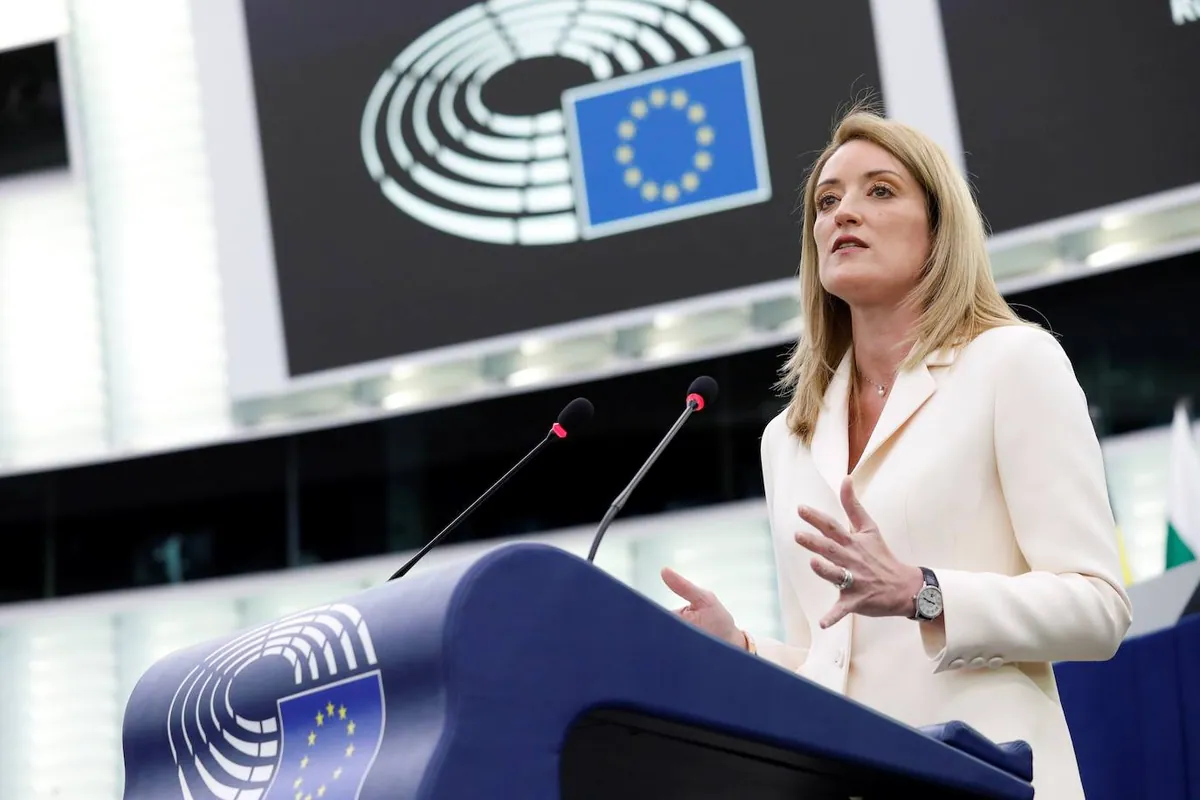
A study by the German group Agora Digitale Transformation identified 50 European Parliament members linked to websites hosting sexual deepfakes. Parliament President Roberta Metsola called the posts a form of violence and urged authorities to enforce the EU’s new rules.
Researchers at Agora Digitale Transformation found that, among the 720 MEPs they checked, 50 were linked to websites publishing fabricated sexual images: 46 women and four men. ABC’s article initially describes the number as “around 60,” but its own breakdown totals 50; the research group and news agency EFE also report 50 affected MEPs.
European Parliament President Roberta Metsola said at the opening of a plenary session in Strasbourg that violence against women, online or offline, was unacceptable. She said deepfakes were intended not only to humiliate individuals but also to pressure elected politicians while they carry out their work. Metsola said Parliament would oppose such practices using the means available to it.
The researchers checked the names of all 720 MEPs across 200 websites that publish sexual deepfakes, purported leaks of celebrities’ intimate photos and other images presented as genuine. Their findings describe AI-generated or altered images being used to harass dozens of members of the European Parliament. In a broader study of European politicians, the group identified 147 cases, 138 involving women.
Metsola called for the distribution of this material to stop and for the EU’s new rules to be enforced. A ban on certain AI systems intended to create or manipulate intimate material without the depicted person’s consent is due to apply from 2 December 2026. The date appears in the revised timetable for the EU Artificial Intelligence Act and is also given by the European Commission for the relevant prohibition.
The Parliament president stressed that adopting rules alone would not guarantee protection: member states and relevant authorities would have to ensure they are applied. Her remarks followed the publication of research into sexualised deepfakes used against politicians.