
Oil supply restrictions have compounded the island’s energy problems: the UN reports tens of thousands of delayed surgeries as authorities expand solar power.
Cuba is facing a prolonged energy crisis amid fuel shortages and limits on oil supplies. Power cuts often last more than 12 hours a day and approach 20 hours in some provinces, The Hindu reports. The Associated Press has also linked the outages to dwindling fuel reserves and an ageing power grid.
In January 2026, U.S. President Donald Trump threatened tariffs on countries that sell or provide oil to Cuba. The Hindu reports that the U.S. Coast Guard began intercepting vessels bound for the island. Independent UN experts condemned the restrictions, describing them as “energy starvation” and an unlawful blockade; those terms are the experts’ characterization.
The longstanding U.S. embargo has been reinforced by the newer measures. In July, the UN General Assembly voted 136 to 9, with 30 abstentions, to hold a debate on the embargo. The vote concerned whether to hold the debate, not adoption of a binding resolution to end the restrictions. Cuba’s government estimates the cumulative damage at $178.7 billion; that figure is Havana’s assessment.
The shortages have affected health care. The UN says fuel scarcity is making it harder to reach hospitals. Three special rapporteurs cited a backlog of more than 96,000 surgeries, including 11,000 for children, and delays to infant vaccinations. Regional supply routes have also changed: Venezuela previously sent Cuba about 100,000 barrels of oil a day under an oil-for-services arrangement. Those shipments stopped after the U.S. operation in Venezuela in January, and Mexico, formerly responsible for about 44% of Cuba’s oil imports, later suspended deliveries. Russian shipments remain sporadic.
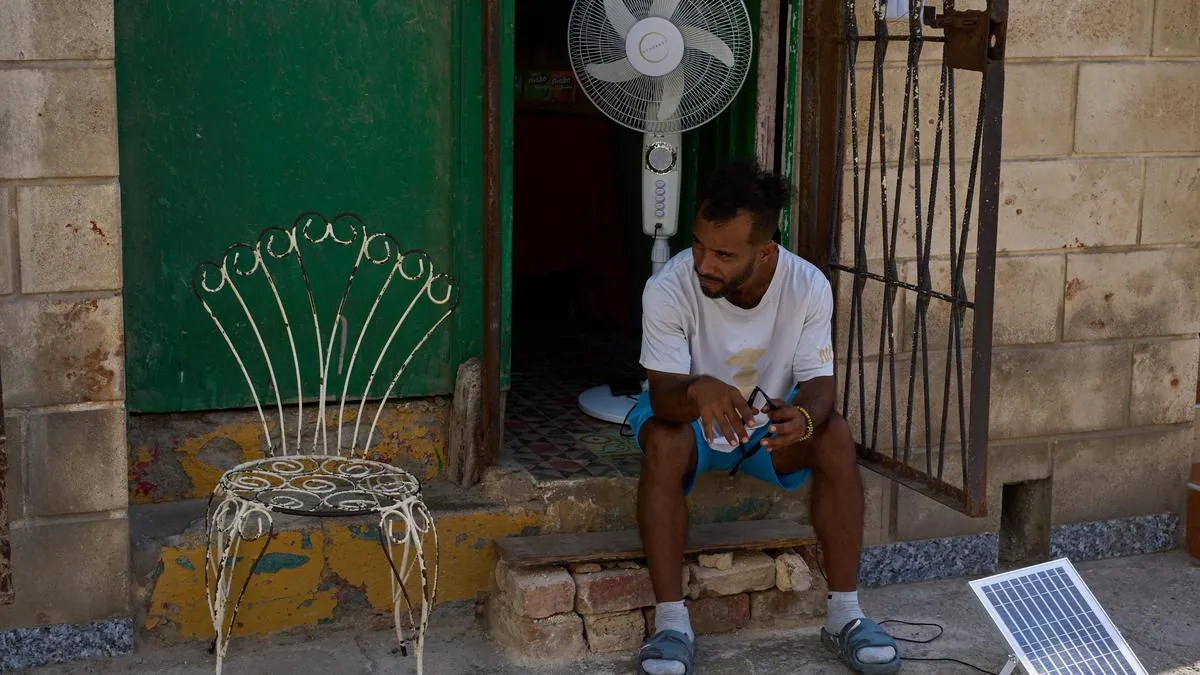
The authorities are expanding solar power. President Miguel Díaz-Canel said the country had installed 1,418 megawatts of solar capacity in 144 parks by September, and aims to exceed 1,500 MW by the end of 2026. He said renewables already provide 21.4% of Cuba’s electricity. But solar panels stop generating after sunset, storage remains inadequate and the grid still relies on ageing oil-fired plants.
China is supplying equipment for solar parks and standalone systems. Chinese customs data show bilateral trade, after reaching $320 million in 2022, fell to about $230 million in 2025 and $145 million during part of 2026. Cuba has also approved 176 reforms intended to expand private enterprise and foreign investment, but talks with Washington have made little visible progress, The Hindu reports.