
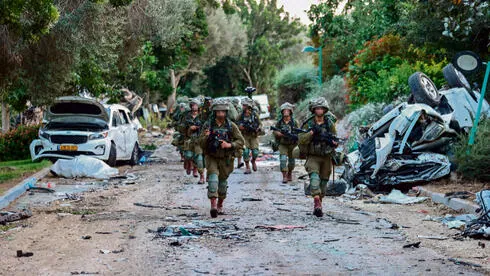
Ynet describes expanded forces, reserves and defensive depth on several fronts. The decisive measure, its analysis argues, will be whether the military can respond when an adversary achieves surprise again.
Three years after the October 7, 2023 attack, the Israel Defense Forces has presented a series of changes to its security doctrine, operational readiness and force structure. The measures include more units and reserves, stronger intelligence and firepower, and exercises built around surprise attacks. But Ynet notes that Israel already had advanced intelligence, a powerful air force, special units, border barriers and modern surveillance before the attack. The number of new posts or formations alone therefore cannot show whether the military has learned how to prevent another failure.
The central lesson that Ynet attributes to Chief of Staff Eyal Zamir is to prepare not only to prevent surprise, but also to fight after it occurs. The army is increasing readiness and reserves, running unannounced exercises, testing extreme scenarios, shortening response times and preparing fire plans in advance. The article cautions that even repeated drills cannot guarantee readiness for a scenario the military did not think to practice.
Changes differ across the fronts. In Gaza, the article says the IDF holds about 64% of the territory following a ceasefire and the end of Operation Gideon’s Chariots. It controls routes and positions and continues searching for underground infrastructure in areas under its control. Ynet describes this as a shift from defending the border to holding ground beyond it, with the stated aim of preventing Hamas from re-establishing itself nearby. Questions remain about how long such a deployment can be maintained and how many personnel it requires.
In Lebanon, Israel is seeking defensive depth rather than waiting for Hezbollah’s Radwan force or fire capabilities to approach the border. The article refers to a security zone about 10 kilometers deep. In Syria, after the fall of Bashar al-Assad’s government, a deeper security area of up to 15 kilometers has been established to provide time to respond and room to operate. In the West Bank, Ynet says the focus has shifted from isolated raids toward longer operations aimed at dismantling armed-group infrastructure in Jenin, Tulkarm and Nur Shams; the military has added divisional command there.
The common idea is to identify and act against a threat before it reaches a border or community. But holding more territory requires more posts, weapons, intelligence, active forces and reservists. Ynet points to a tension: the army wants forces available on several fronts while a prolonged war is increasing fatigue and personnel shortages.
The article also lists force-structure changes: new formations and battalions, rapid-response units, drones and remotely piloted aircraft, and expanded intelligence and fire capabilities. It says about 40,000 reservists have been added since the war began, tens of thousands have been reassigned, around 30 battalions have been added to the fighting force, and mandatory service has been extended to 32 months.
Ynet’s analysis says these measures reflect both learning and the correction of gaps exposed after the war began. It is therefore too early to call the new security doctrine complete. The IDF is trying to rebuild for surprise attacks and a multi-front war while maintaining readiness and holding positions over time. The article concludes that reforms will ultimately be judged not by their number, but by the next crisis—when intelligence changes, an adversary acts, and the military must recognize the threat and decide within minutes.