The Finance Ministry says the economy has entered the current quarter on a strong footing, but warns that growth cannot be taken for granted.
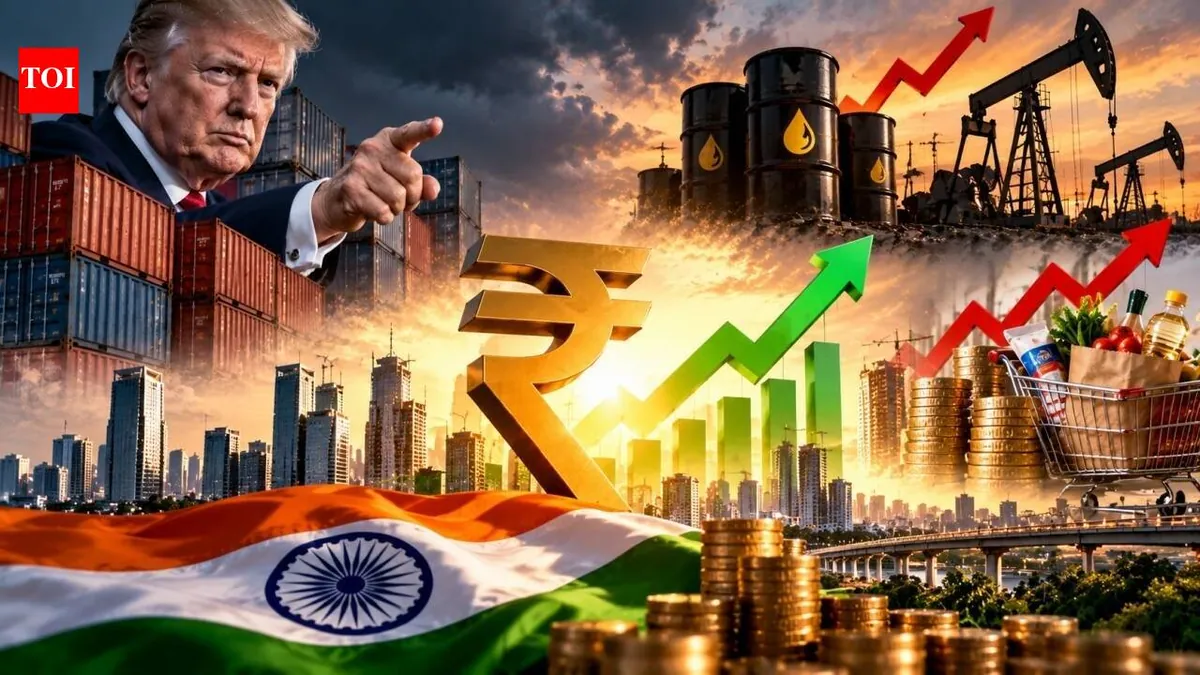
India remains the world’s fastest-growing major economy, with GDP growth beating estimates, but higher oil prices, capital outflows and geopolitical uncertainty could test that resilience. The country imports about 90% of its oil, and crude prices have returned above $100 a barrel, adding to inflationary pressure.
The Finance Ministry’s September review says recent gains—including record foreign-exchange reserves, robust industrial output and stronger services activity—do not guarantee that momentum will last. It flags elevated global bond yields, supply-chain disruption and uncertainty over trade and investment as risks to the outlook. Mint’s coverage of the same review likewise highlighted pressure on capital inflows and unsettled US trade relations.
EY India policy adviser D.K. Srivastava identified four main threats: oil remaining above $100 a barrel, geopolitical escalation and logistics costs, persistent global inflation delaying rate cuts, and tighter financial conditions that could make capital flows volatile. Higher energy costs could widen India’s current-account deficit and weaken the rupee. The review also points to gross tax-revenue growth of 6.5% in the first five months of fiscal 2026–27, below the recent average, as a possible constraint on public investment.
The Graham Sanctioning Russia and Iran Act has added another trade risk. The law gives the US president authority to impose tariffs of up to 100% on major buyers of Russian energy; independent reports say this could affect India and China. PwC India economist Ranen Banerjee also cited crop-related inflation and possible new tariffs on Indian exports among the risks.
The government review points to countervailing strengths. Merchandise exports rose 26.1% year on year in August, and services exports covered 65% of the goods-trade gap. It estimates that goods exports could approach $400 billion in the first five months at the current pace. The report also cites stronger monsoon conditions, domestic demand and the potential for net foreign direct investment to improve this fiscal year.
Analysts say high refining capacity, foreign-exchange reserves, domestic markets and renewable-energy growth can cushion external shocks. But they caution that sustaining growth above 7% would be harder if oil prices remain high and crop output weakens. The Finance Ministry says maintaining macroeconomic stability, encouraging private investment and improving logistics, productivity and export competitiveness will be important to preserve growth.