
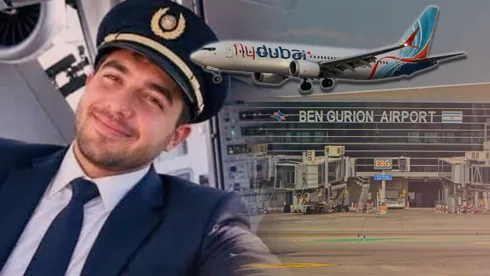
Menachem “Manna” Bachrach, an Israeli counterterrorism and aviation-security specialist, argues that security systems must anticipate new attack methods instead of only responding after an incident. In an interview with Ynet, he also offered criticism of the handling of Flydubai flight FZ1073, an incident he said remains under investigation.
Bachrach, a retired brigadier general and author of a book on aviation security, describes the field as a cycle of attacks, responses and efforts to identify new vulnerabilities. He says terrorists need only one weak point, while security systems must protect against many possible threats.
Regarding flight FZ1073, Bachrach said authorities had considered the possibility that someone with legitimate access to an aircraft and its systems could carry out an attack. He also said the pilot had been flagged as a potential risk. Ynet presented these as Bachrach’s claims. He said the investigation was still ongoing.
He proposed cameras in the cockpit that would let air-traffic controllers monitor activity, as well as a mechanism to open the cockpit door remotely. These are his recommendations, not confirmed government decisions. He compared the case with earlier failures to assess threats, including the September 11 attacks and the October 7 attacks.
Bachrach’s book traces aviation security from the 1968 hijacking of an El Al aircraft to Algeria. He describes how screening measures changed as attackers shifted tactics, including attempts to use luggage, passengers and shoulder-fired missiles. He also says layered security, intelligence sharing, regulation and technology have substantially reduced the risk of attacks on aircraft.
His central concern is that identifying a threat may not lead to operational action, or that systems may rely too heavily on technology. He warns that one careless link in the security chain can leave the whole system exposed.