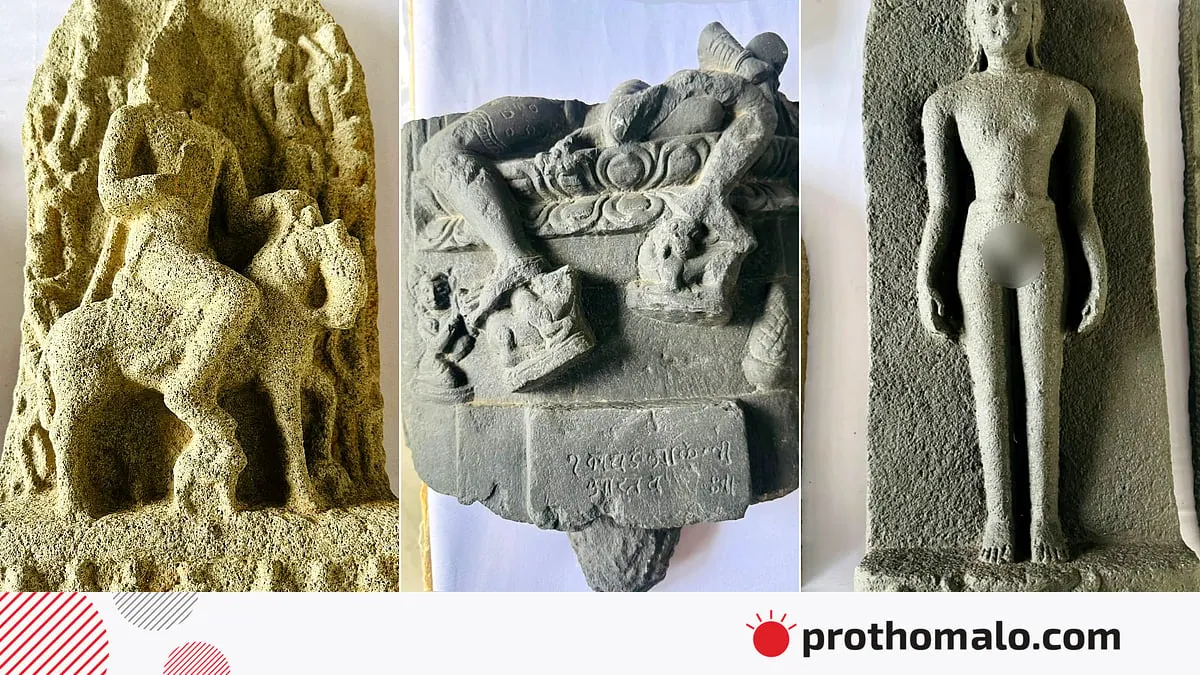
The collection includes a rare Revantha sculpture tentatively dated to the seventh century and objects from later periods.
Bangladesh’s National Museum has received 26 archaeological objects and 1,818 metal coins recovered in Rajshahi and transferred by a border guard battalion. The collection includes a rare sandstone sculpture of the deity Revantha, preliminarily dated to the seventh century. The dating is tentative and was made from photographs, an archaeology researcher told Prothom Alo.
Other objects include a Jain Tirthankara sculpture dated to the ninth or tenth century and an Aparajita statue from the 11th or 12th century. The museum placed most stone Vishnu sculptures in the 11th-12th centuries, while a brass Radha figure was dated to the 19th or 20th century. The collection also includes a 156-kilogram sandstone Chamunda, a Nataraja Shiva, an intact shivalinga and sculpture fragments.
The coins found on chars in the Padma River span several periods, including British India, colonial rule, Pakistan and independent Bangladesh. The objects were recovered from six areas of Rajshahi, including Godagari and Bagha. Their transfer followed correspondence between agencies from January 2025 through March 2026, as the museum took custody to provide more secure storage.
The museum plans to chemically conserve the objects and prepare exhibit information. A special display is planned after that work is complete. The collection is not yet open to general visitors because gallery space is limited.