F-35 debate highlights the long-term risks of relying on foreign arms suppliers
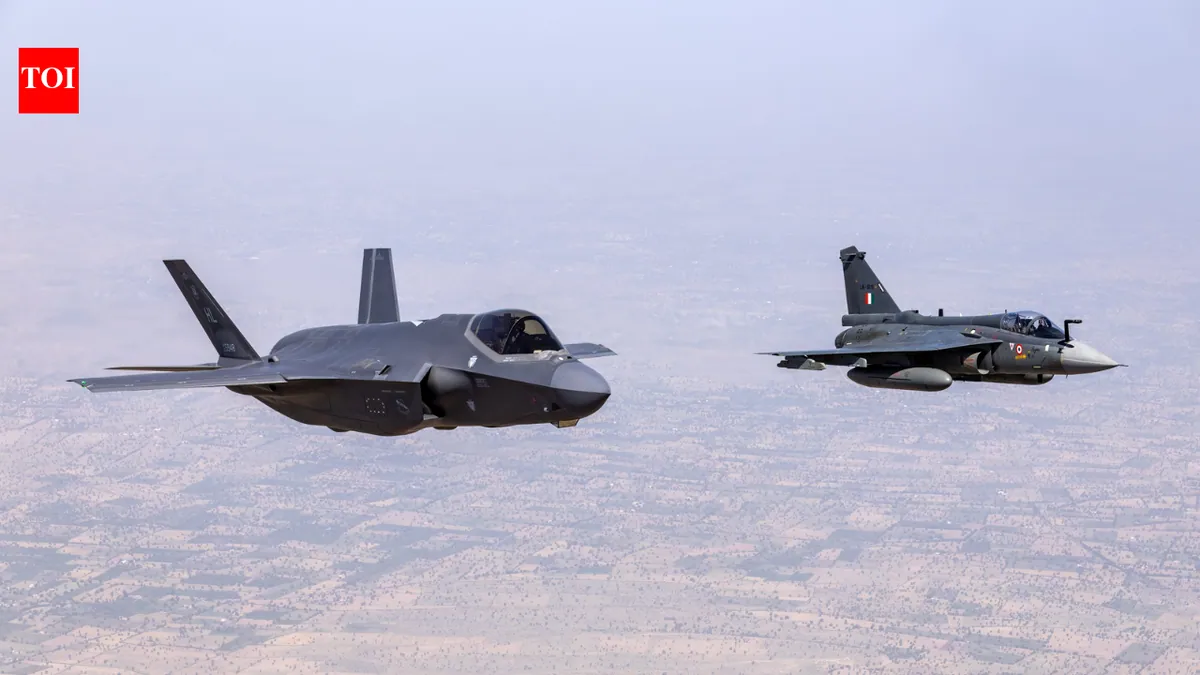
Turkey’s removal from the program in 2019 and Portugal’s review of its F-16 replacement show how defence procurement can depend on politics and technology access.
Buying a weapons system creates long-term obligations. Countries can depend on suppliers for spare parts, software, ammunition, maintenance and upgrades over the platform’s service life. Export approvals, sanctions and technology-transfer limits can also affect a country’s ability to operate or modify its equipment.
In July 2019, the United States began removing Turkey from the F-35 program after Ankara bought Russia’s S-400 air-defence system. The Pentagon said the systems were incompatible because of risks to the aircraft’s sensitive capabilities. Turkey lost its planned jets and its industrial role in the program.
European countries have chosen the F-35 for its stealth, sensors and interoperability with allies. But participation in a multinational program does not give buyers full control over development. A Times of India analysis argues that efforts to integrate new weapons and software updates can depend on the US-led program’s shared infrastructure.
The publication says claims of a secret remote kill switch for the F-35 are unsubstantiated. A more concrete question is whether limits on spare parts, technical support, software updates or critical data could eventually affect readiness.
Portugal offers a current example of the procurement debate. On October 8, Foreign Minister Paulo Rangel told Reuters that the country was seriously considering the US F-35 alongside other options to replace 28 upgraded F-16s. Portugal has not yet opened a formal competition.
For India, the issue intersects with a long-standing pursuit of strategic autonomy. Its forces use equipment from Russia, the United States, France and Israel, including C-17 and C-130J transports, P-8I patrol aircraft, Apache, Chinook and MH-60R helicopters, and M777 howitzers. New Delhi is also seeking more domestic manufacturing and technology transfer.
The Times of India analysis points to sanctions imposed after India’s 1998 nuclear tests and the later possibility of CAATSA sanctions over its S-400 purchase. It cautions that India’s circumstances differ from Turkey’s. Diversifying suppliers and local assembly can reduce dependence, but do not necessarily give a country control of software or critical components.
The analysis frames strategic autonomy as the ability to keep operating, maintaining and upgrading a system if ties with its supplier deteriorate. Access to parts, updates and underlying technology can matter as much as the platform itself.