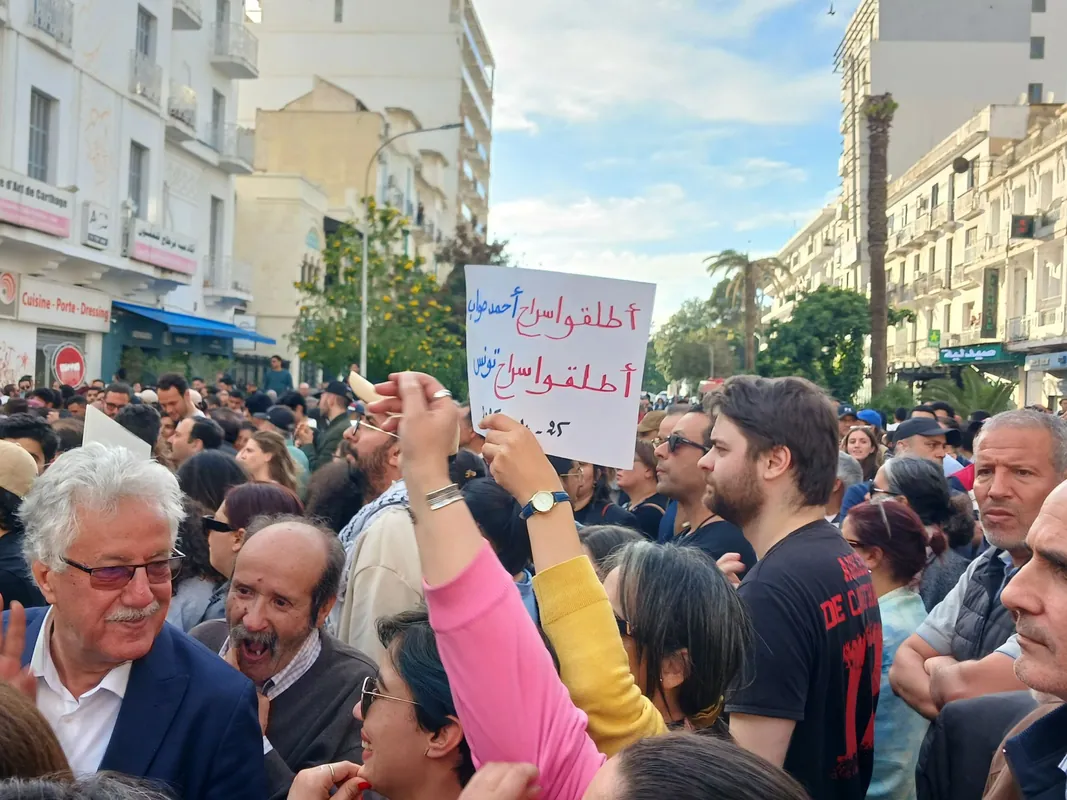
Eight Tunisian opposition parties have linked deteriorating living conditions and rights protections to the country’s political crisis and called for a renewed democratic transition. They said they would join an Oct. 17 march organized around freedoms, jobs and purchasing power.
The joint statement was signed by Al-Masar, Al-Qotb, the Socialist Party, the Workers’ Party, the Democratic Current, Ettakatol, Afek Tounes and the Republican Party. The parties called for the release of political prisoners, people jailed for expressing their views and detainees held over solidarity with Palestine. They also urged an end to trials connected with political or civic activity and called for prisoners’ rights to be protected.
The parties backed a planned march called by trade unions and rights groups, as well as a separate demonstration by unemployed people who say the authorities have failed to meet job-creation commitments. Ahmed Ferhat al-Hamoudi of the opposition Republican Party said the Oct. 17 march would express frustration with social and economic conditions and with the exclusion of major civic organizations from public dialogue.
Al-Hamoudi said organizers want to restore democracy and institutions that protect freedoms, including an independent judiciary and a constitutional court. Lawyer and political analyst Abd al-Razzaq al-Khalouli expected the march to remain among the peaceful demonstrations permitted under Tunisian law. He said the right to protest was not a blank check and argued that serious dialogue was the only way to resolve the country’s problems.
Economist Reza Chakandali attributed public anger to rising prices and weaker purchasing power. He cited September inflation of 5.6%, up from 5.4% in August, and said prices had risen 16.5% for poultry, 14.5% for meat and more than 15% for fruit. President Kais Saied has blamed some crises on conspiracies and corruption inherited from earlier years. Since he suspended parliament and the constitution on July 25, 2021, the authorities have said they preserved macroeconomic stability, while critics point to weak growth, employment and investment. The government rejects accusations that it is suppressing opponents.