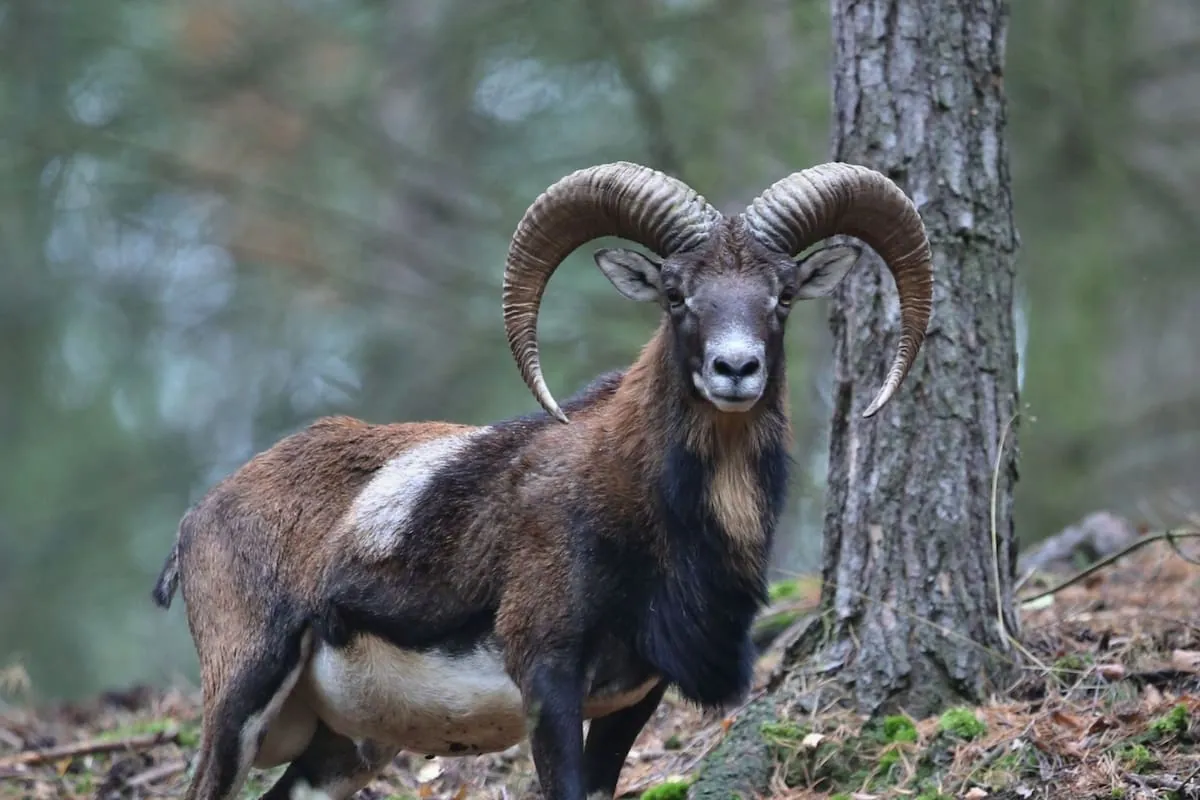
About 11 animals were released on the island in 1971 for hunting. Mouflon are now treated as an invasive species whose grazing and trampling can damage rare plants and soils in the volcanic park.
Mouflon were brought to Tenerife in the early 1970s as a game species, but the animals later became an ecological concern for Teide National Park. Tenerife’s island council confirms the species was introduced in 1970 for hunting and now occurs around the park and the Corona Forestal Natural Park. Conservation documents record that 11 animals were released in Teide in 1971.
The mouflon is a wild member of the cattle-and-goat family. With few natural checks on the island’s high slopes, the population became established and spread. The animals feed on vegetation, including endemic plants found only in the Canary Islands or Tenerife. Persistent grazing can hinder plant regeneration, while the animals’ movement can trample soil and contribute to erosion.
The park is especially vulnerable because it contains many native species, some restricted to Tenerife. These include the Teide violet, a protected plant. Mouflon are listed in Spain’s catalogue of invasive alien species, and authorities use population-control measures to reduce pressure on the park’s flora.
Male mouflon are generally larger than females. The source article puts their weight at about 50 to 55 kilograms and notes their backward-curving horns. The case illustrates how introducing an animal for hunting can have lasting effects on a fragile island ecosystem.