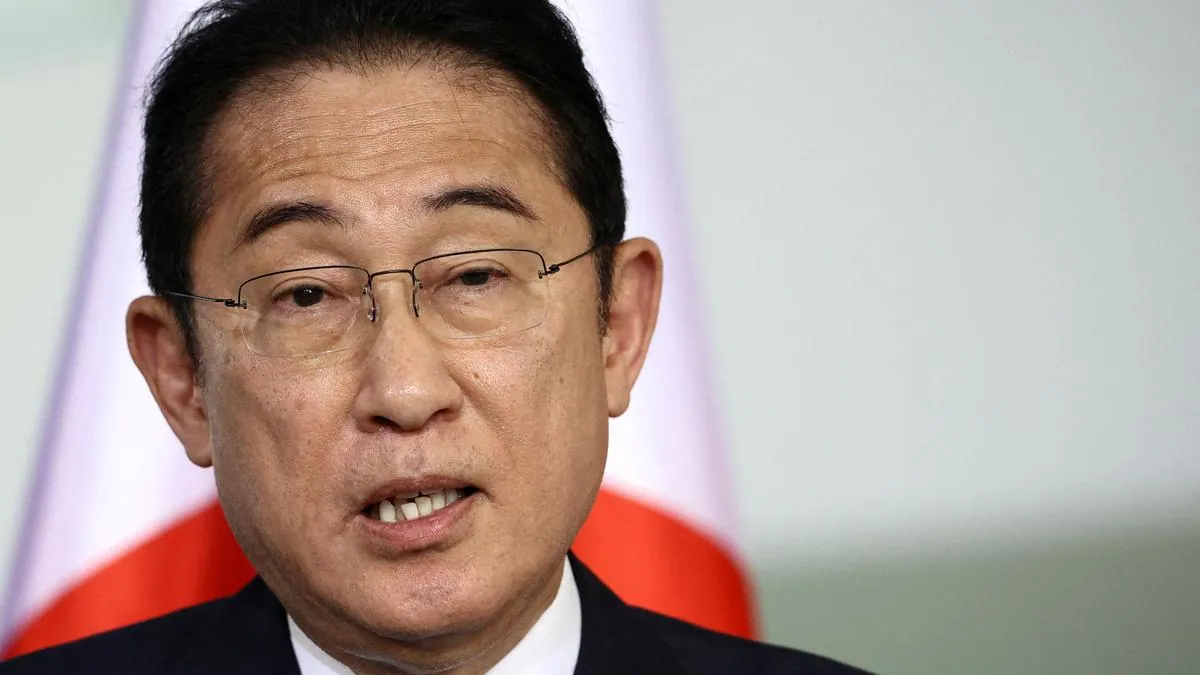
Japan faces its most severe and complex security environment since the Second World War, former Prime Minister Fumio Kishida told The Hindu. He said the U.S. alliance remains the cornerstone of Japan’s security policy as Tokyo builds ties with India and other Indo-Pacific partners.
Kishida said Japan is strengthening its defence capabilities while keeping to an exclusively defence-oriented posture under its Constitution and international law. He cited the continuation of the Malabar exercises with India and said Japan’s policy aims to protect people’s lives and peaceful livelihoods.
Kishida, now chairman of the Japan-India Association, called India an irreplaceable partner. In his 2023 plan for a Free and Open Indo-Pacific, he identified an industrial value chain linking India’s northeastern states with the Bay of Bengal as a key initiative.
Japan has supported development in northeastern India through road connectivity, forest and biodiversity conservation, water and sanitation, healthcare and agriculture. Kishida described connectivity as a key to prosperity in South Asia.
He said China’s actions in the South China Sea heighten regional tensions, pointing to large-scale land reclamation and militarisation in disputed areas. Kishida said the situation affects regional peace and stability and that Japan opposes attempts to change the status quo by force or coercion.
Kishida said the Quad—Australia, India, Japan and the United States—remains active and is not weakening. On Myanmar, he called for an end to violence, the release of detainees including Aung San Suu Kyi, and a return to democracy through implementation of ASEAN’s Five-Point Consensus. He also said a safe, voluntary and dignified return of displaced people is essential to resolving the Rohingya refugee crisis.