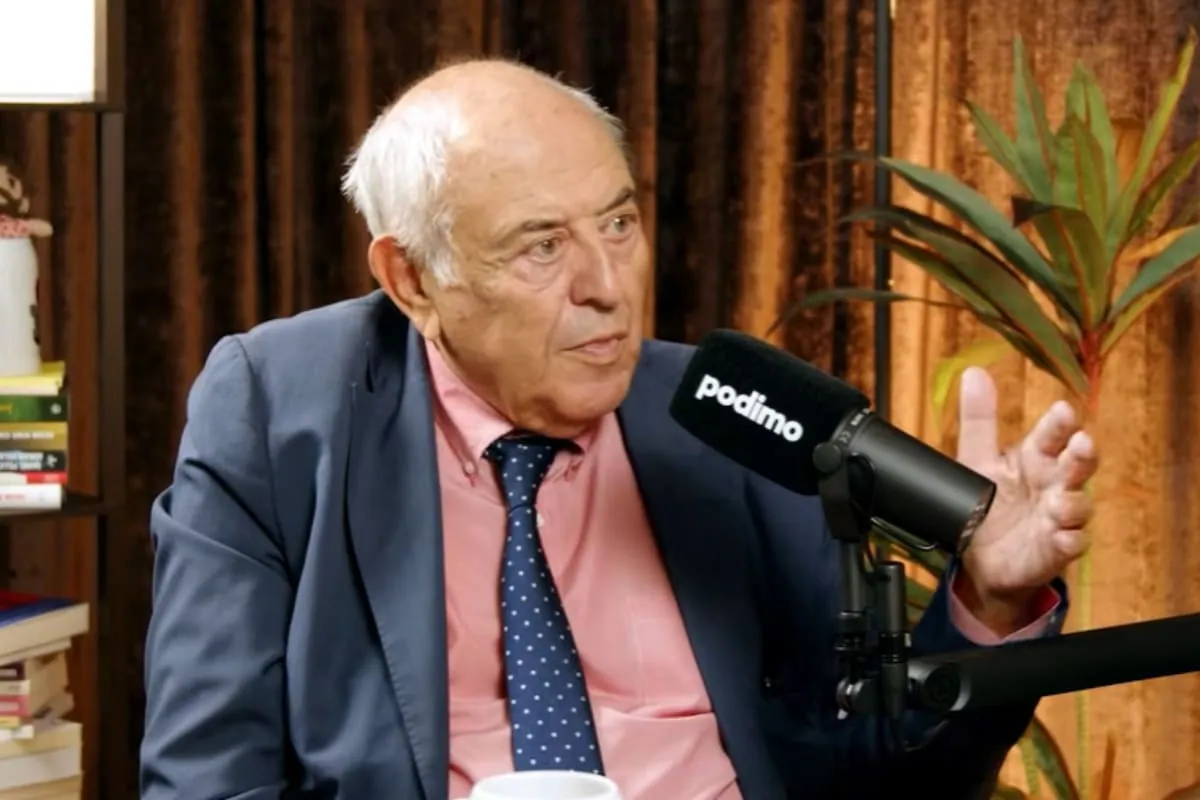
87-year-old Spanish philosopher and educator José Antonio Marina argues that everyday conversation can affect how people reason and develop ideas. He shared the view in an interview with Ricardo Moya on the podcast El Sentido de la Birra.
Marina calls the effect “shared intelligence.” A discussion, he says, can produce more than the sum of the ideas each participant brought to it. When people listen and build on one another’s points, they may leave with a broader understanding of the subject.
He describes the process as an exchange of prompts. One person’s observation can lead another to an unexpected thought, which may then be revised or developed into a new idea. The result belongs to the interaction between the speakers rather than to either one alone.
Marina says people in such a conversation do more than exchange ideas they already have. A response can prompt them to reconsider their views, notice aspects they had overlooked and form more complex arguments. The shared insight emerges from the connection between participants and belongs to neither speaker alone.
Marina also warns that conversation can have the opposite effect. Exchanges dominated by reproaches, unproductive criticism and pessimism can leave both participants feeling that everything is going wrong. In his view, the problem is not discussing difficult or negative subjects. It is failing to understand them better through the discussion.
Questions, arguments and new proposals help keep a conversation productive, Marina says. Without them, a group’s mood can weaken its members’ critical thinking. “If the conversation was intelligent, you and I have left it more intelligent than we entered,” he said.