
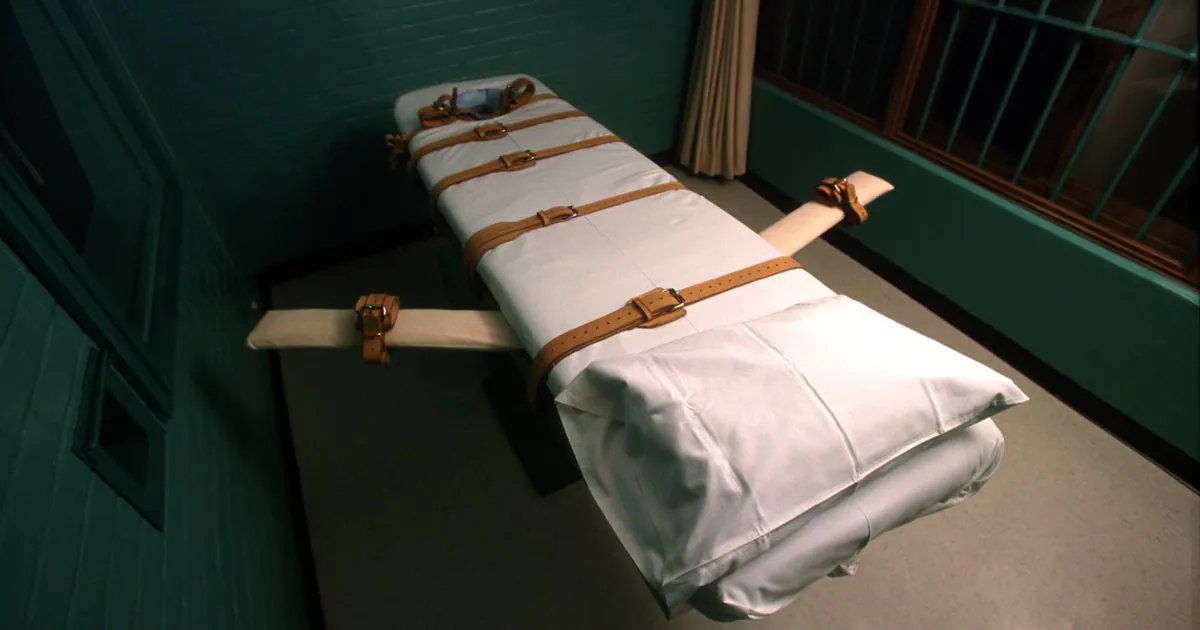
Jamaal Howard’s lawyers have asked a court to stay his execution scheduled for Wednesday, arguing that Texas’ lethal-injection drug could pose the same risks as the drug used in the failed execution attempt of Christa Pike in Tennessee.
In a motion filed on the morning of Oct. 7 with the Texas Court of Criminal Appeals, the defense also sought disclosure of information about the pentobarbital dose the Texas Department of Criminal Justice plans to use. The lawyers said the department had asked the state attorney general whether it was required to release the information. An opinion is not expected until after the scheduled execution date, the filing said, leaving Howard unable to challenge a possible refusal in time. Texas officials had not responded to a request for comment by Wednesday morning.
Howard, 46, was convicted of capital murder in the death of Vickie Swartout, a 42-year-old convenience store clerk in Silsbee. She was shot during a robbery in 2000. Surveillance footage presented at trial showed Howard shooting her. Court records say he was 20 at the time and took $114 and a carton of cigarettes from the store.
Howard’s lawyers argue that Texas’ supply of pentobarbital may have degraded. The same drug was used in the failed attempt to execute Pike on Sept. 30. Her attorneys say the 50-year-old survived two doses and was hospitalized. On Tuesday, they said she was conscious and speaking but still receiving critical medical care, with an uncertain prognosis. The defense has alleged that Pike’s veins were damaged during the attempt, that the drug supply in Tennessee had deteriorated and that emergency medical care was inadequate. Attorney Steve Ferrell also said doctors were working to clear the drug from Pike’s body and had placed her on a ventilator.
Howard’s lawyers say the Texas supply may also have degraded because the beyond-use dates had passed. They link that risk to the circumstances they say contributed to the failed attempt in Tennessee. Texas has not confirmed the condition of its drug supply.
The defense separately argues that Howard has an intellectual disability and should not be executed. Texas officials say he has not provided evidence sufficient to meet the state’s criteria. His appeal is pending before the U.S. Supreme Court. In 2002, the court barred the execution of people with intellectual disabilities while giving states some discretion in determining whether a person meets that standard.
Texas has carried out six executions in 2026. Two more were scheduled after Howard. If all the scheduled executions go ahead, the U.S. total for the year would reach 30. Florida has carried out 16 executions this year, more than any other state. Tennessee Republican Gov. Bill Lee has halted the state’s one remaining execution scheduled for this year.
Former Army Maj. Nidal Hasan, who killed 13 people in a 2009 shooting at Fort Hood, is also scheduled to be executed on Dec. 3 at the same post where the attack took place. He is due to die by firing squad, which would be the first U.S. military execution since 1961. Pentagon spokesman Sean Parnell said Defense Secretary Pete Hegseth recommended the Army firing squad and President Donald Trump approved the plan.