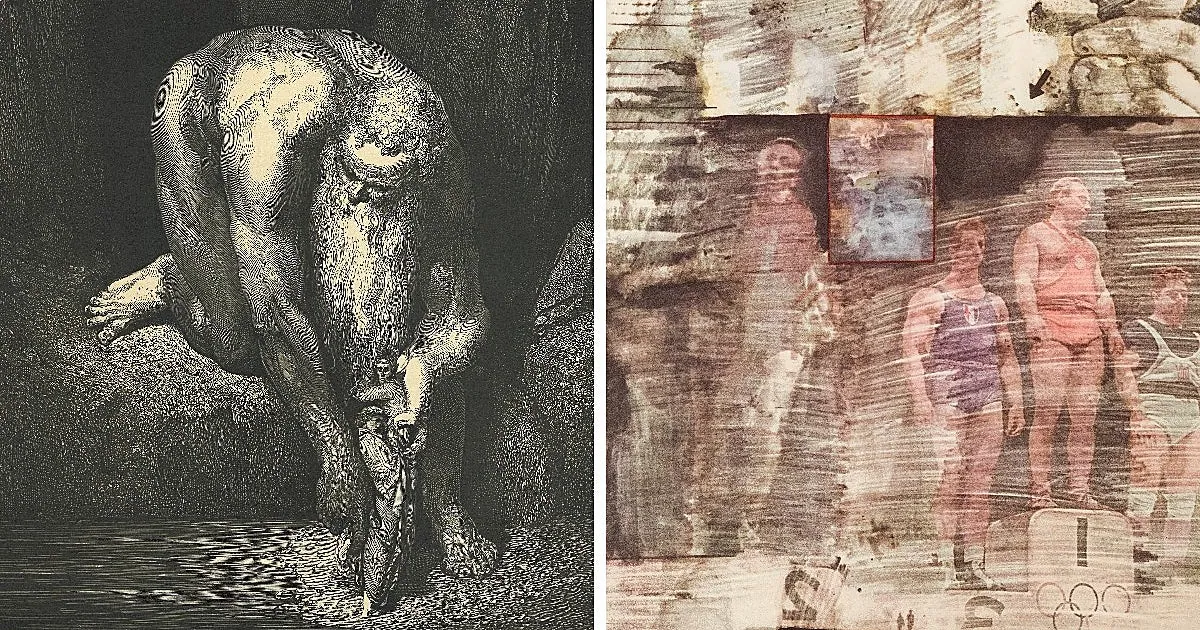
Fundación Canal is showing 111 graphic works by the two artists: 76 engravings by Gustave Doré and 35 lithographs by Robert Rauschenberg. The exhibition opens Oct. 7 and runs through Jan. 5.
A new exhibition at Fundación Canal in Madrid explores two artistic interpretations of Dante Alighieri’s “Inferno.” “Dante’s Inferno. Doré and Rauschenberg” brings together works by French illustrator Gustave Doré and American artist Robert Rauschenberg, who were separated by roughly a century. Curator Lola Durán says the artists share an engagement with Dante’s text but render it differently: Doré creates detailed narrative scenes, while Rauschenberg reframes the poem’s themes through the realities of his own time.
The exhibition includes 111 graphic works from two complete series. Doré’s series comprises 76 woodcuts, including a portrait of Dante, from the first French edition of the “Divine Comedy,” published by Hachette in 1862. Rauschenberg’s series includes 35 offset lithographs from a 1965 edition that he supervised. He used a mixed technique combining gouache, crayon and pencil.
Doré’s illustrations emphasize chiaroscuro, precise drawing and a Romantic, medieval vision of hell. Rauschenberg, by contrast, incorporated images from magazines such as Time, Life and Sports Illustrated to create a contemporary commentary on the poem. The curator says he saw Dante’s themes reflected in struggles for power, the Cold War, technological change and the anxieties of mid-20th-century American society.
The exhibition also considers why the “Divine Comedy” continues to resonate in contemporary culture. Durán describes it as a kind of map of sin, guilt and human moral nature. The show opens Oct. 7 at Fundación Canal’s Sala Mateo Inurria in Madrid and runs through Jan. 5.