Xona prepares to launch its first six Pulsar navigation satellites
The company expects to begin testing its commercial GPS alternative after the spacecraft launch in October. It ultimately plans a constellation of more than 250 satellites in low Earth orbit.
California-based Xona Space Systems is preparing to put six Pulsar satellites into orbit. The company says the SpaceX Bandwagon-5 mission is scheduled for late October. It will mark the first stage in deploying a commercial navigation system that Xona is developing as a complement to GPS.
The startup was founded in 2019 by five engineering school classmates from Stanford. Co-founder and CTO Tyler Reid studied low-Earth-orbit navigation in his doctoral work. The team believes this architecture could help in settings where signals from traditional navigation systems are vulnerable to interference or insufficiently precise.
CEO Brian Manning says the company is targeting equipment and services for precision positioning rather than a free replacement for GPS. Xona says its signals will work with a range of existing receivers after a software update. The company has not independently confirmed compatibility across all such devices.
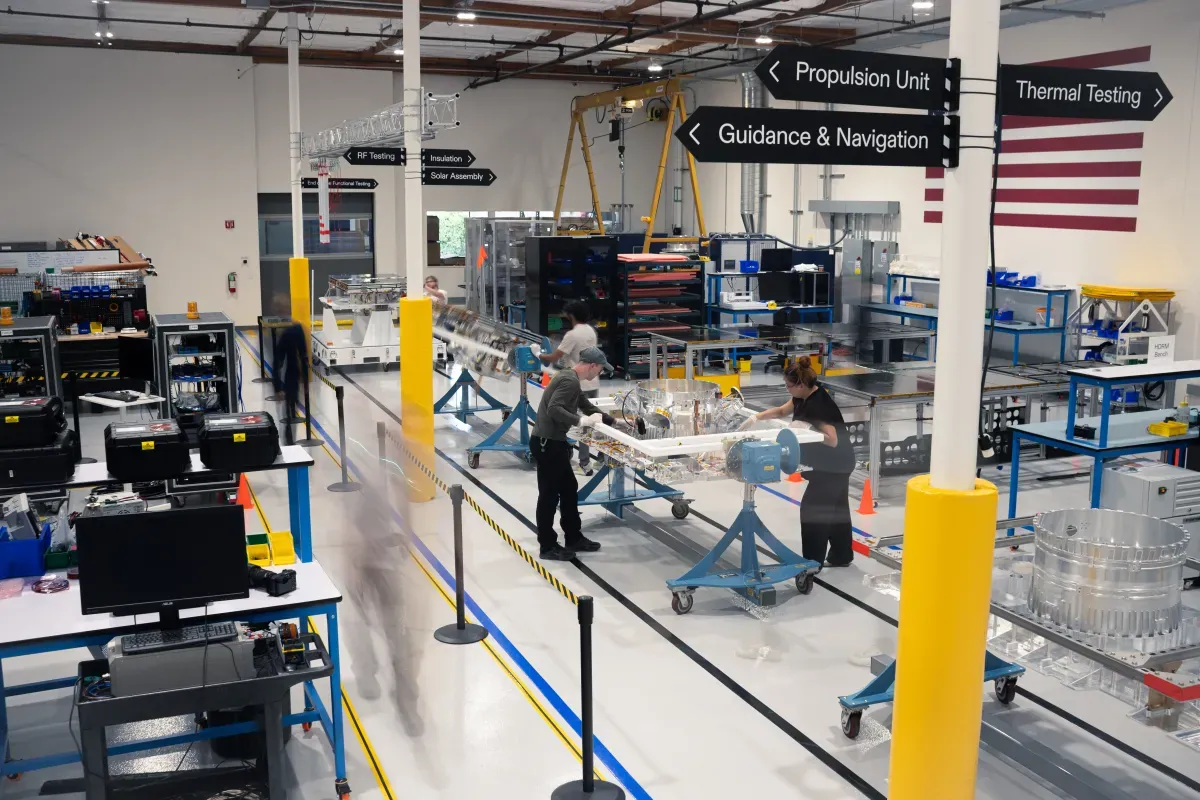
Four spacecraft in the October batch use a platform developed by Belgium’s Aerospace Labs, while two were designed and built by Xona itself in Burlingame. The company eventually aims to expand Pulsar to 258 satellites. The project uses signals from low orbit and a different time-synchronization method that, according to its developers, does not require expensive atomic clocks on every spacecraft.
Xona says the system could provide accuracy down to a few centimeters and resist jamming and spoofing. These specifications should be treated as claimed capabilities, not as results from a full commercial service. After launch, Xona plans tests, including checks of receivers and time-synchronization services. Observers at mid-latitudes may be able to track satellite passes around eight times a day.
Xona aims to provide continuous coverage over the United States, Europe, Japan and South Korea by 2028. The company is seeking customers in autonomous transport, aviation safety and precision timing. TechCrunch reports that the project has attracted more than $300 million in investment, including $20 million from the U.S. Space Force.